A dog tag only helps if it stays securely attached, remains readable, and does not become an unnecessary nuisance for your dog. When I look for the best way to attach a dog tag to a collar, I pay close attention to the attachment hardware, tag material, size, engraving quality, and how easily the tag can be transferred between collars.
For most dogs, a sturdy metal split ring remains the simplest and most reliable attachment method. It works with the D-ring found on most collars and does not require special hardware. For owners who want more information than a traditional engraved tag can hold, a QR-enabled tag is another practical option.
Quick Summary
This guide is for dog owners who want a dependable ID tag that can be securely attached to an everyday collar. Traditional hanging tags with strong split rings work especially well because they fit almost any standard collar and are inexpensive to replace.
My top overall recommendation is the GoTags Stainless Steel Personalized Pet ID Tag Dog Bone. Its stainless-steel construction, double-sided engraving, and included split-ring attachment make it a particularly practical choice for everyday identification.
Top Product List
- GoTags Stainless Steel Personalized Pet ID Tag Dog Bone — Best Overall
- Ring Pet Tag QR Code Pet Profile Tag — Best Smart ID Tag
- Name Pattern Art Stainless Steel Deep Engraved Pet ID Tag — Best for Deep Engraving
- Providence Engraving Personalized Pet ID Tag 8 Shapes — Best Value
- Dr. Fremont's Personalized Anodized Aluminum Pet ID Tag — Best Lightweight Option
- GoTags Stainless Steel Personalized Pet ID Tag Heart — Best Stylish Stainless-Steel Option
Best Way to Attach Dog Tag to Collar
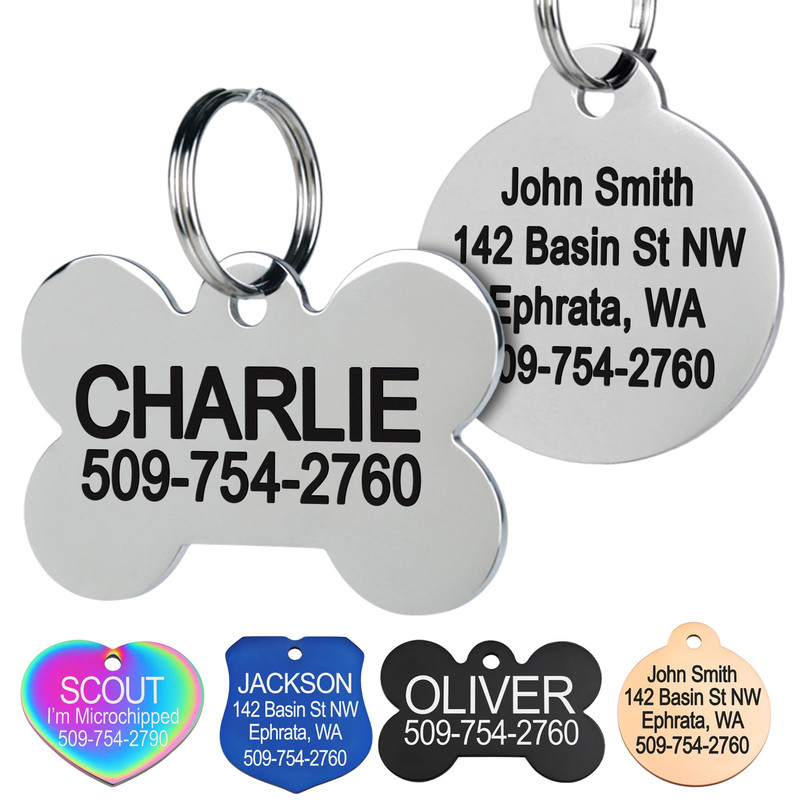
GoTags Stainless Steel Personalized Pet ID Tag Dog Bone
Short Description
This personalized GoTags model combines a traditional hanging-tag design with durable stainless steel. I like it for everyday collars because it uses a familiar split-ring attachment and offers plenty of room for identification information.
Key Specifications
- Stainless-steel construction
- Bone-shaped design
- Regular size intended for medium and larger dogs
- Small and regular sizes available within the product family
- Double-sided personalization
- Up to four lines of text per side
- Polished finish
- Split ring included for collar attachment
Pros
- More durable than lightweight aluminum tags
- Engraving available on both sides
- Included split ring works with standard collar D-rings
- Plenty of space for contact information
- Suitable for active everyday use
Cons
- Heavier than aluminum
- Hanging stainless-steel tags can jingle against other metal tags
- Polished surfaces can develop cosmetic scratches
My Experience
For a conventional collar setup, this is the attachment style I would choose first. The split ring threads directly through the collar's D-ring and creates a connection that is difficult to pull apart accidentally.
I also prefer stainless steel when durability matters more than keeping weight to an absolute minimum. I would periodically check the split ring for distortion, especially on an active dog that frequently runs through brush or rough terrain.
What Other Buyers Say
Buyer feedback is consistently strong for GoTags stainless-steel ID tags, with engraving clarity and long-term durability receiving frequent praise. Owners also appreciate being able to put information on both sides. The typical trade-offs are the familiar jingling sound of a hanging metal tag and cosmetic scratching after extended use.
Best For
Dogs needing a durable everyday identification tag on a conventional collar.
➡️➡️➡️ Explore User Feedback and Current Pricing on Amazon
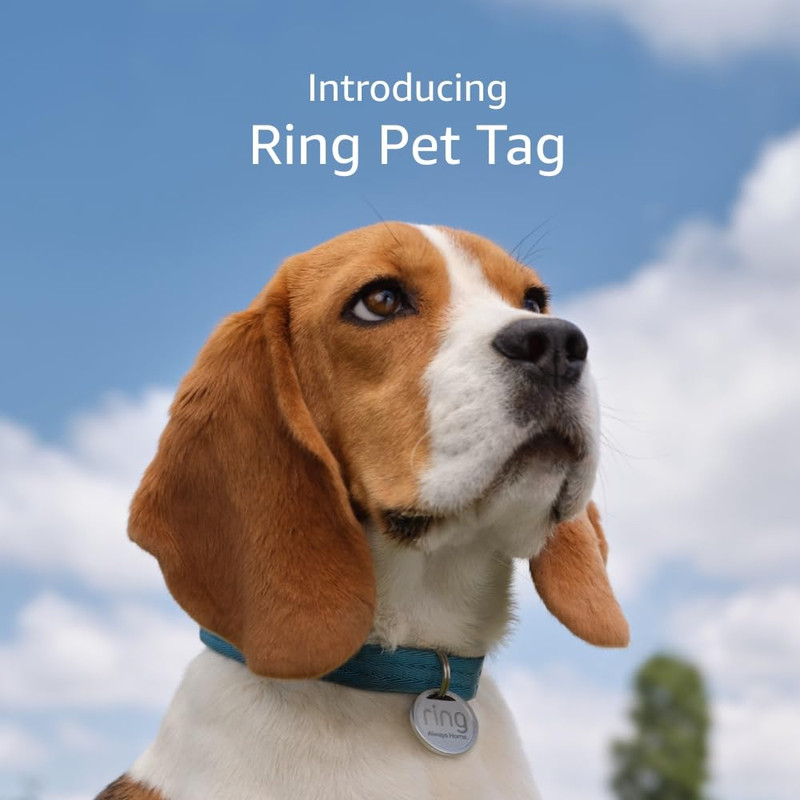
Ring Pet Tag QR Code Pet Profile Tag
Short Description
The Ring Pet Tag replaces extensive engraved text with a scannable QR code connected to a digital pet profile. It attaches to a collar with an included keyring.
Key Specifications
- Approximately 1.1-inch diameter
- Approximately 0.08 inch thick
- Included keyring for collar attachment
- QR-code pet profile
- Scan notifications
- Digital profile can include pet information
- No battery required
- No subscription required for the tag's core service
- Requires a compatible phone and internet connection for setup and scanning
Pros
- Stores more information than a conventional engraved tag
- Owner can update the digital profile
- Scan alerts add another layer of identification
- No battery to charge
- Included ring makes installation straightforward
Cons
- A finder must recognize and scan the QR code
- Digital features depend on phone and internet access
- Less immediately readable than a tag displaying a phone number directly
My Experience
I see the Ring Pet Tag as a useful complement to traditional identification rather than a reason to ignore the basics. Attaching it is simple: the included ring goes through the collar's D-ring much like a traditional dog tag.
Its real advantage is the amount of information a QR profile can make available. For maximum redundancy, however, I still like having immediately visible identification whenever practical.
What Other Buyers Say
Owners commonly praise the straightforward setup, convenient profile system, and ability to receive alerts when the tag is scanned. Feedback also highlights the convenience of updating information digitally instead of replacing an engraved tag. Its usefulness naturally depends on the finder having a smartphone and scanning the code.
Best For
Owners who want a digital identification profile and scan notifications.
➡️➡️➡️ Explore User Feedback and Current Pricing on Amazon
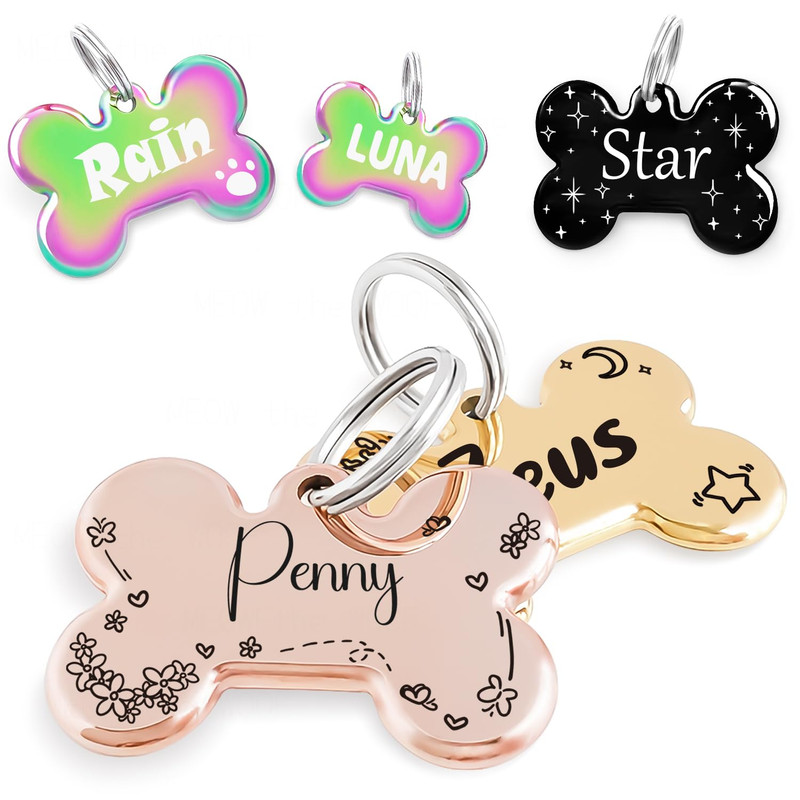
Name Pattern Art Stainless Steel Deep Engraved Pet ID Tag
Short Description
This personalized ID tag focuses on stainless-steel construction combined with deeper decorative engraving. It is a good match for owners who want identification that also has a more distinctive appearance.
Key Specifications
- 316L stainless-steel construction
- Deep engraving
- Multiple size options
- Multiple finishes and decorative patterns
- Designed as a hanging pet ID tag
Pros
- Durable stainless-steel material
- Deep engraving helps identification stand out
- Multiple sizes
- Decorative options offer more personalization
Cons
- More decorative designs can reduce visual simplicity
- Metal hanging tags can jingle
- A heavier metal tag may not suit very small dogs
My Experience
I would choose this style when durability and appearance are both priorities. Stainless steel makes sense for an active dog because it is less prone to bending than thin aluminum.
With decorative tags, I prioritize the phone number and essential information over filling every available space. The most useful dog tag is still the one a stranger can understand quickly.
What Other Buyers Say
Recurring feedback is especially positive about the substantial stainless-steel feel, engraving quality, and decorative designs. Owners who prioritize readability may prefer simpler patterns because elaborate artwork can make smaller text less prominent.
Best For
Owners wanting a durable personalized tag with a more decorative design.
➡️➡️➡️ Explore User Feedback and Current Pricing on Amazon
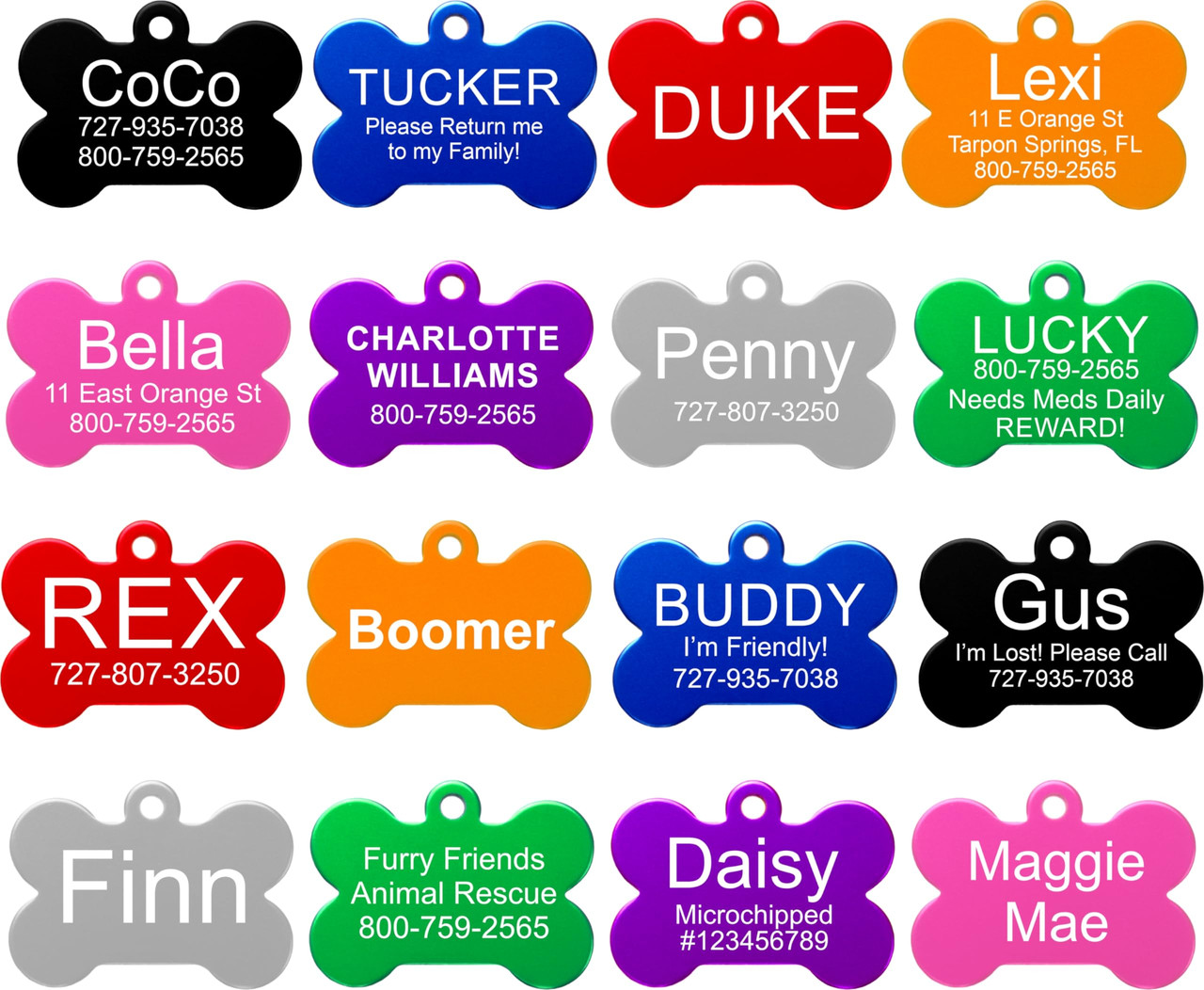
Providence Engraving Personalized Pet ID Tag 8 Shapes
Short Description
Providence Engraving offers a lightweight aluminum tag with extensive choices in shape, color, size, and personalization. A metal split ring is included for attachment.
Key Specifications
- Lightweight anodized aluminum
- Eight available shapes
- Nine color choices
- Small and large size options
- Large tags approximately 1.25 inches
- Small tags approximately 1 inch
- Up to four lines of text per side on supported shapes
- Split ring included
- Laser-etched personalization
Pros
- Very lightweight
- Numerous shape and color combinations
- Two sizes suit different dogs
- Split ring included
- Plenty of personalization space
Cons
- Aluminum is easier to scratch than stainless steel
- Colored anodized surfaces can show wear with prolonged use
- Hanging design may create some tag noise
My Experience
For small dogs or owners who simply dislike heavy collar accessories, aluminum makes a lot of sense. The included split ring provides the same straightforward attachment method as heavier stainless-steel tags without as much weight hanging from the collar.
I would make sure the ring passes fully through the collar's metal D-ring rather than attaching it to fabric or decorative loops.
What Other Buyers Say
The large volume of positive feedback tends to focus on readable personalization, color selection, low weight, and overall value. Longer-term complaints about aluminum tags generally center on scratches and cosmetic finish wear rather than complicated installation.
Best For
Owners wanting an affordable, lightweight tag with lots of customization choices.
➡️➡️➡️ Explore User Feedback and Current Pricing on Amazon
Dr. Fremont's Personalized Anodized Aluminum Pet ID Tag
Short Description
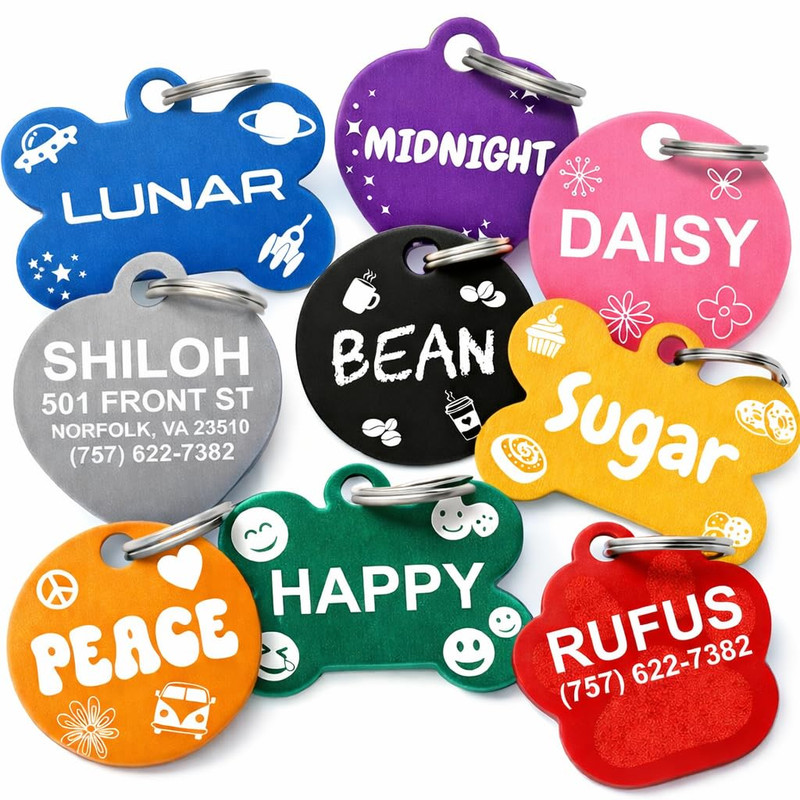
Dr. Fremont's personalized tag is another lightweight alternative to stainless steel, using anodized aluminum and an included split ring.
Key Specifications
- Anodized aluminum
- Approximately 1-inch small sizes and 1.5-inch large sizes, depending on shape
- Multiple shapes available
- Multiple colors available
- Front-and-back laser engraving
- Split ring included
Pros
- Lightweight on the collar
- Wide choice of shapes and colors
- Two-sided personalization
- Simple split-ring attachment
- Suitable for dogs of different sizes
Cons
- Aluminum can develop surface wear
- Not as substantial as stainless steel
- Color shades can vary slightly because of the anodizing process
My Experience
I particularly like lightweight aluminum for smaller dogs, where an oversized steel tag can feel unnecessarily bulky. Installation is uncomplicated, and the included split ring means no separate clip is required.
The important part is choosing a proportionate size. I want the tag large enough to read but not so large that it repeatedly strikes the dog's chest while walking.
What Other Buyers Say
Owners frequently mention the lightweight construction, customization choices, and readable engraving positively. As with other anodized aluminum tags, buyers looking for maximum resistance to cosmetic wear may prefer stainless steel.
Best For
Small and medium dogs that benefit from a lightweight hanging ID tag.
➡️➡️➡️ Explore User Feedback and Current Pricing on Amazon
GoTags Stainless Steel Personalized Pet ID Tag Heart
Short Description
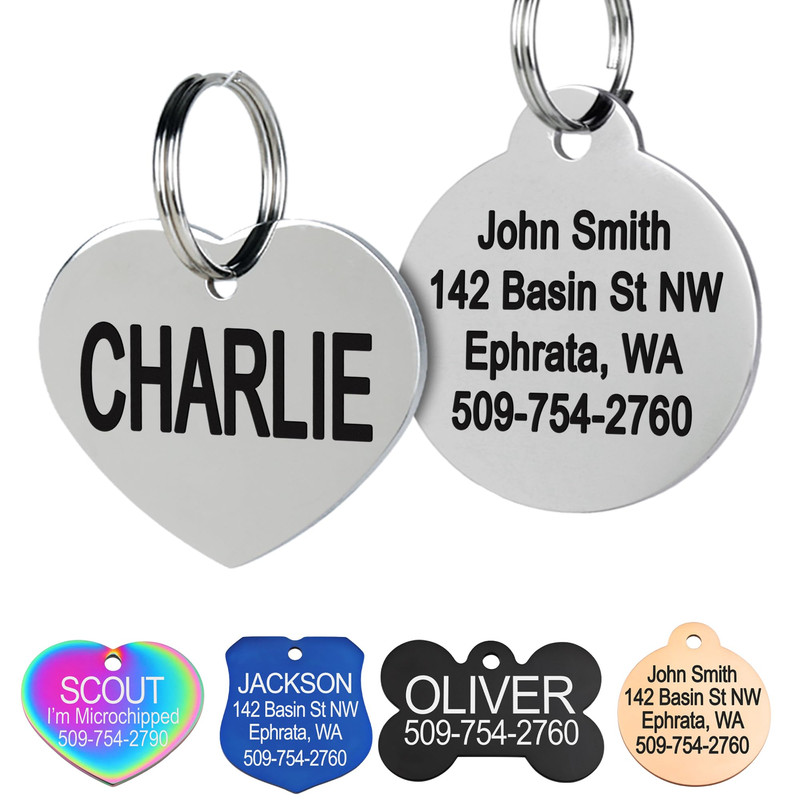
This heart-shaped GoTags option provides essentially the same practical advantages I look for in a stainless-steel hanging tag while offering a less traditional shape.
Key Specifications
- Stainless-steel construction
- Heart shape
- Double-sided engraving
- Up to four lines of custom identification per side
- Polished finish
- Split-ring attachment
Pros
- Strong stainless-steel construction
- Clear double-sided personalization
- Secure conventional attachment method
- Attractive alternative to a bone-shaped tag
Cons
- Heavier than aluminum tags
- Can jingle against license or vaccination tags
- Polished steel may collect visible scratches
My Experience
Functionally, I would attach this exactly the same way as the bone-shaped GoTags model: thread the split ring completely through the collar's D-ring and then confirm that the ring has returned to its fully closed position.
The heart design is mainly an aesthetic difference, so I would choose between the two GoTags options based on shape rather than expecting a major difference in attachment security.
What Other Buyers Say
Feedback for GoTags stainless-steel tags repeatedly favors the readable engraving and robust construction. Owners often appreciate having enough room for multiple lines of contact information. Noise and surface scratching are the most predictable compromises of a traditional polished metal hanging tag.
Best For
Owners who want stainless-steel durability with a more decorative heart-shaped design.
➡️➡️➡️ Explore User Feedback and Current Pricing on Amazon
How to Choose the Right Pet Product
For most dogs, I consider the split ring attached to the collar's metal D-ring the best all-around way to secure a conventional dog tag. It is inexpensive, widely compatible, and has very few parts that can accidentally open.
Match the tag size to the dog. Small dogs usually benefit from lightweight aluminum or smaller stainless-steel tags, while medium and large dogs can comfortably carry larger tags with more engraving space.
Material matters too. Stainless steel is my preference for durability, especially for active dogs, while aluminum keeps collar weight down. Whichever material you select, check that engraved information remains readable.
Keep the most important information simple. A dog's name and one or two current phone numbers are more useful than filling every engraving line with tiny text.
Inspect the attachment regularly. Split rings can eventually bend, clips can loosen, and collar D-rings can wear. I make attachment checks part of the same routine as checking collar fit.
Noise is another consideration. Multiple metal tags hitting one another can be surprisingly loud. If jingling bothers your dog, using fewer tags or an appropriately fitted tag silencer can help.
For outdoor and travel use, prioritize durability and redundancy. A conventional readable ID tag can work immediately without technology, while a QR tag can provide additional information when a smartphone and internet connection are available.
FAQs
What is the safest way to attach a dog tag to a collar?
For a normal hanging ID tag, I prefer a strong metal split ring threaded completely through the collar's metal D-ring. Check periodically that the ring has not stretched or bent.
Should I use a split ring or quick-release clip for a dog tag?
A split ring has fewer moving parts and is my preference for permanent everyday attachment. A quick-release clip is more convenient if you regularly move the same tag between collars, but its closure should be inspected frequently.
Where should the dog tag attach on the collar?
Attach it to the collar's designated metal D-ring or ID-tag ring. Avoid attaching identification to decorative fabric loops that were not designed to hold hardware.
Are stainless-steel or aluminum dog tags better?
Stainless steel generally offers better resistance to bending and long-term wear. Aluminum is much lighter and can be more comfortable for small dogs. The better choice depends on your dog's size and activity level.
Is a QR dog tag better than an engraved tag?
A QR tag can store far more information and may let you update a digital profile, but someone must scan it. I prefer having immediately accessible identification whenever possible, with QR functionality serving as an additional layer.
Conclusion
For the best way to attach dog tag to collar in 2026, I still favor a properly installed metal split ring connected directly to a sturdy collar D-ring. It is simple, secure, and compatible with almost every standard dog collar.
My Best Overall choice is the GoTags Stainless Steel Personalized Pet ID Tag Dog Bone because its durable material, double-sided engraving, and included split ring make it a dependable everyday solution.
For Best Value, I would choose the Providence Engraving Personalized Pet ID Tag 8 Shapes. Its lightweight aluminum construction, multiple sizes, broad customization choices, and included attachment ring work well for a wide range of dogs.
My Best Premium Choice is the Ring Pet Tag QR Code Pet Profile Tag for owners who want digital pet information and scan notifications in addition to physical collar identification.
Whichever tag you choose, I recommend checking the attachment whenever you inspect your dog's collar. A clear ID tag is only useful if the hardware keeping it on the collar remains secure.