Top 6 Best Small Dog Wheelchairs for 2026
When a small dog starts losing strength in the rear legs—or needs support during rehabilitation—the right wheelchair can make everyday movement easier and more manageable. I look for a cart that is light enough for a small dog to propel, adjustable enough for a secure fit, and comfortable around the chest, abdomen, and hindquarters.
For this 2026 guide, I focused especially on frame weight, adjustability, wheel design, harness comfort, sizing, and whether the wheelchair supports only the rear legs or the entire body. Proper measurements matter enormously with mobility equipment, so I recommend measuring your dog carefully rather than choosing a wheelchair based on breed alone.
Quick Summary
This guide is primarily for owners of small dogs with hind-leg weakness, paralysis, age-related mobility loss, or rehabilitation needs. Rear-support wheelchairs generally work best when a dog still has reliable front-leg strength, while four-wheel carts are more appropriate when both the front and rear of the body need assistance.
My top overall recommendation is the Walkin' Wheels Small Dog Wheelchair 11-25 lbs Blue because its lightweight aluminum construction and extensive height, length, and width adjustment make it one of the more versatile options for small dogs.
Top Product List
- Walkin' Wheels Small Dog Wheelchair 11-25 lbs Blue — Best Overall
- Best Friend Mobility Small Dog Wheelchair — Best Value
- Best Friend Mobility Quad 4-Wheel Full Support Dog Wheelchair Small — Best for Full-Body Support
- Walkin' Wheels Small Dog Wheelchair 11-14 lbs Seafoam — Best for Very Small Dogs
- Walkin' Wheels Small Dog Wheelchair 15-25 lbs Seafoam — Best Premium Choice
- Best Friend Mobility Medium Dog Wheelchair — Best for Heavier Small-to-Medium Dogs
Top 6 Best Small Dog Wheelchairs for 2026
Walkin' Wheels Small Dog Wheelchair 11-25 lbs Blue
Short Description
This adjustable rear-support wheelchair is designed around small dogs in the 11-25-pound range. I like it most for owners who want substantial fitting flexibility rather than a rigid, one-size cart.
Key Specifications
- Designed for small dogs weighing approximately 11-25 lbs
- Lightweight extruded aluminum frame
- Adjustable height, length, and width
- All-terrain, puncture-resistant foam wheels
- Rear-leg support design
- Foldable construction for easier transport and storage
- Intended for dogs that retain useful front-leg strength
Pros
- Excellent range of adjustment
- Lightweight frame
- Suitable for indoor and outdoor movement
- Wheels do not require inflation
- Easier to adapt as a dog's mobility needs change
Cons
- Correct measurement is essential
- More expensive than basic mobility carts
- Initial setup and fitting can take some trial and error
My Experience
What stands out to me is the adjustability. A wheelchair that can change in several directions is especially useful with dachshunds, pugs, French bulldogs, and other breeds whose proportions don't always correspond neatly to body weight.
I would spend extra time on the first fitting. Getting the height and body support right is more important than assembling the cart quickly.
What Other Buyers Say
Recurring buyer feedback praises the ability to adjust the cart and the difference it can make in a dog's independence. Owners also frequently mention dogs being able to return to walks and outdoor activity.
The main complaints involve initial assembly, figuring out the correct fit, and dogs needing an adjustment period before moving naturally.
Best For
Small dogs whose front legs remain strong but whose rear legs need significant assistance.
➤➤➤ Click Here to Check Price on Amazon
Best Friend Mobility Small Dog Wheelchair
Short Description
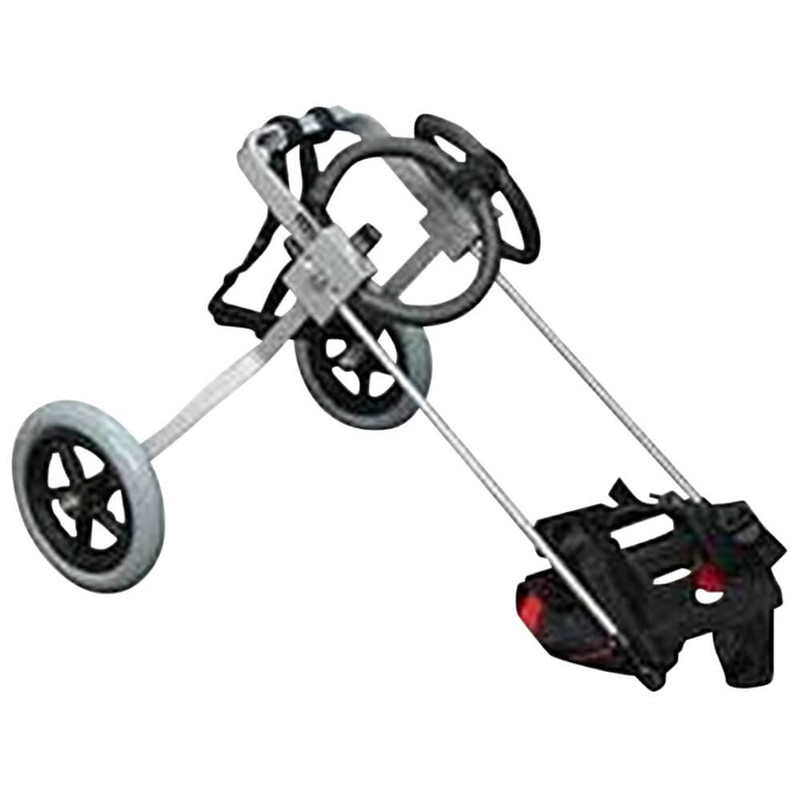
The Best Friend Mobility Small Dog Wheelchair is a traditional two-wheel rear-support cart with an adjustable aluminum frame. I see it as a practical alternative for owners who want a relatively straightforward mobility system without moving into a four-wheel design.
Key Specifications
- Aluminum frame
- Stainless, corrosion-resistant hardware
- Adjustable frame
- Front and rear harness support
- Polyurethane wheels with sealed bearings
- Designed for assisted walking or full rear-leg support
- Dog can relieve itself while properly positioned in the cart
Pros
- Durable metal construction
- Multiple fitting adjustments
- Supportive harness system
- Suitable for different levels of rear-leg weakness
- More affordable than some premium adjustable carts
Cons
- Correct harness adjustment can require patience
- Fit may be less forgiving than more extensively adjustable premium systems
- Some buyers report wishing the instructions were clearer
My Experience
I think this model makes the most sense when value matters but you still want a proper aluminum mobility frame. The ability to alter the cart's fit is important because a poorly positioned rear-support harness can create rubbing or awkward movement.
I'd check the harness position after the first few short sessions rather than immediately taking a dog on a long walk.
What Other Buyers Say
Positive feedback commonly focuses on dogs regaining movement and the frame offering useful support. Buyers also appreciate the adjustability.
Criticism tends to involve sizing, setup instructions, and the time needed to fine-tune straps and frame dimensions.
Best For
Owners looking for a good balance between adjustability, durability, and price.
➡️➡️➡️ Explore User Feedback and Current Pricing on Amazon
Best Friend Mobility Quad 4-Wheel Full Support Dog Wheelchair Small
Short Description
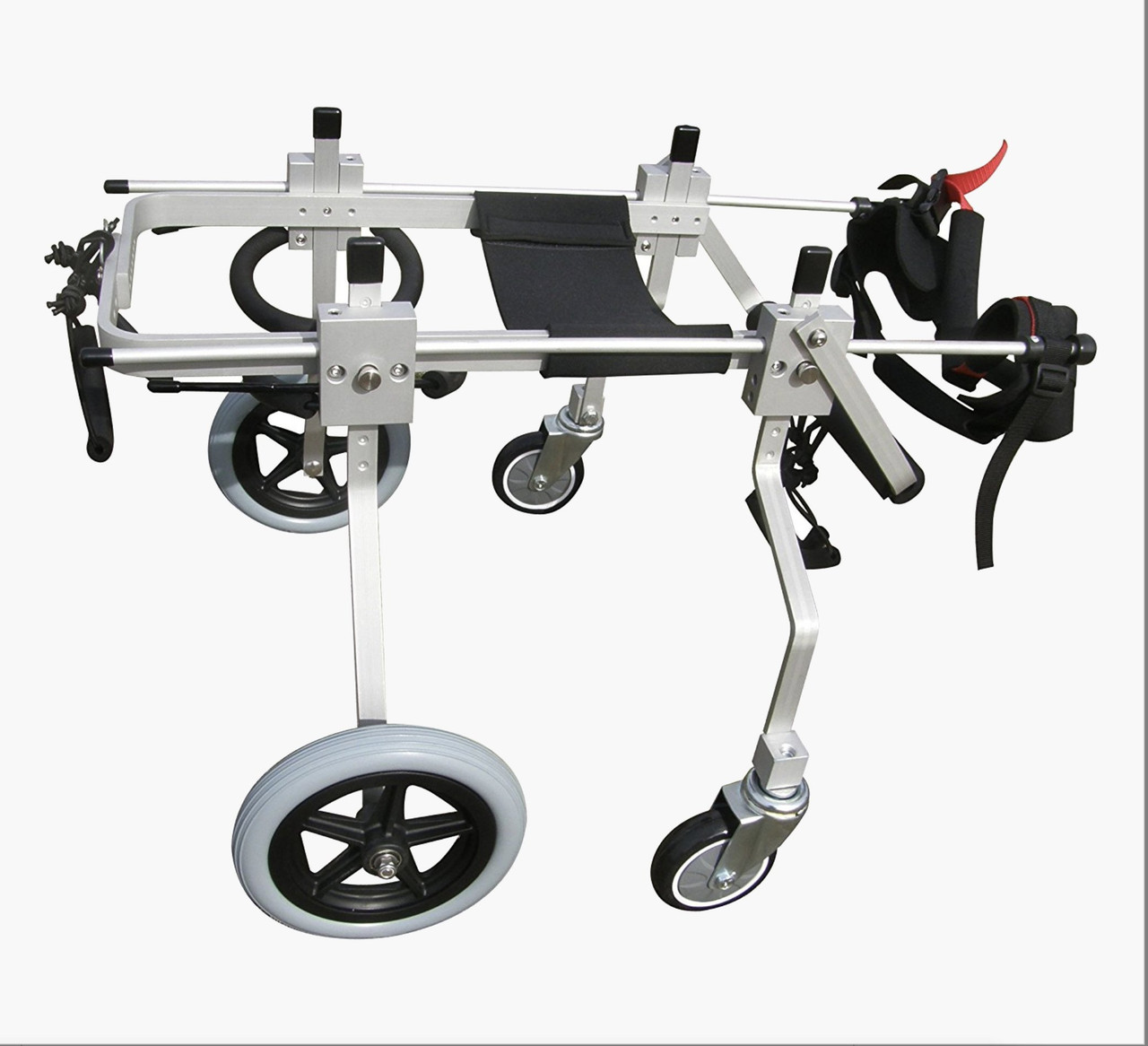
Unlike a standard rear-support cart, this four-wheel wheelchair supports both ends of the body. I would consider it when a small dog has weakness affecting the front legs as well as the hindquarters.
Key Specifications
- Four-wheel full-support configuration
- Lightweight, rust-resistant aluminum frame
- Stainless steel hardware
- Adjustable height, length, and width
- Neoprene front and rear support harnesses
- Polyurethane wheels with sealed bearings
- Paw slings included
Pros
- Supports all four limbs
- Highly adjustable frame
- Useful for more extensive mobility impairment
- Durable metal construction
- All-terrain wheels
Cons
- More complex than a two-wheel cart
- Some buyer feedback reports problems with harness fit or hardware
- Careful supervision is particularly important during setup
My Experience
The major advantage here is obvious: four points of rolling support rather than two. That can make it much more appropriate for dogs that cannot reliably stabilize their front end.
At the same time, I would be especially careful about strap fit. A quad wheelchair has more contact points with the dog, so every harness needs to sit securely without restricting comfortable movement.
What Other Buyers Say
Some buyers praise the construction, adjustability, and usefulness for dogs with multiple weak limbs. Owners also report successful assembly when following the fitting guidance closely.
Negative feedback includes concerns about harness security, fit, and individual components. Because this is a full-support device, I would inspect every clip and strap before each session.
Best For
Small dogs that need both front- and rear-body mobility assistance.
➡️➡️➡️ Explore User Feedback and Current Pricing on Amazon
Walkin' Wheels Small Dog Wheelchair 11-14 lbs Seafoam
Short Description
This is one of the more appropriately sized options here for very small dogs. The 11-14-pound configuration combines the adjustable Walkin' Wheels frame with wheels and struts proportioned for lighter pets.
Key Specifications
- Designed for dogs approximately 11-14 lbs
- Multiple rear-leg-height configurations available within the small-wheelchair platform
- Extruded aluminum frame
- Adjustable height, width, and length
- Dense foam wheels with rubber exterior
- Puncture-resistant wheel design
- Washable components
Pros
- Appropriate sizing for genuinely small dogs
- Lightweight construction
- Highly adjustable
- Easy-clean wheel design
- Good choice for compact breeds
Cons
- Measurements must match the selected configuration
- Premium price
- May require several fitting adjustments initially
My Experience
Small dogs don't have much spare strength to move an unnecessarily heavy mobility cart, which is why I particularly like lightweight frames in this category.
I would measure rear-leg height carefully before ordering. Two dogs of the same weight can have very different leg lengths and body proportions.
What Other Buyers Say
Walkin' Wheels buyers commonly praise the mobility their dogs regain and the range of adjustment available. Some dogs begin moving comfortably quite quickly, while others require gradual introduction and encouragement.
Fit and assembly are the recurring challenges, particularly for owners using a wheelchair for the first time.
Best For
Dachshunds, Maltese, Chihuahuas, miniature poodles, and similarly sized dogs around the 11-14-pound range.
➤➤➤ Click Here to Check Price on Amazon
Walkin' Wheels Small Dog Wheelchair 15-25 lbs Seafoam
Short Description
This version of the Walkin' Wheels small platform accommodates dogs in the 15-25-pound category and combines a lightweight frame with extensive fitting adjustment.
Key Specifications
- Designed around dogs weighing approximately 15-25 lbs
- Lightweight extruded aluminum frame
- Adjustable height, width, and length
- Dense foam, puncture-resistant wheels
- Rear-support configuration
- Washable wheelchair components
- Can accommodate different rear-leg-height configurations
Pros
- Excellent adjustment range
- Lightweight for its support capability
- Durable wheel construction
- Suitable for many popular small breeds
- Designed for both indoor and outdoor mobility
Cons
- Relatively expensive
- Precise measurements are required
- Harness positioning takes time to perfect
My Experience
For a dog toward the heavier end of the small-breed range, I prefer a cart that remains light without feeling overly basic. This Walkin' Wheels configuration fills that role well.
I also like that the frame provides room for adjustment rather than locking an owner into a narrowly fixed geometry.
What Other Buyers Say
Owners frequently praise Walkin' Wheels carts for restoring opportunities to walk, play, and spend time outdoors. Durability and adjustability are recurring positives.
The most common difficulties revolve around initial fitting, assembly, and getting a dog accustomed to moving with wheels behind it.
Best For
Dogs between roughly 15 and 25 pounds that need a premium, extensively adjustable rear-support wheelchair.
➤➤➤ Click Here to Check Price on Amazon
Best Friend Mobility Medium Dog Wheelchair
Short Description
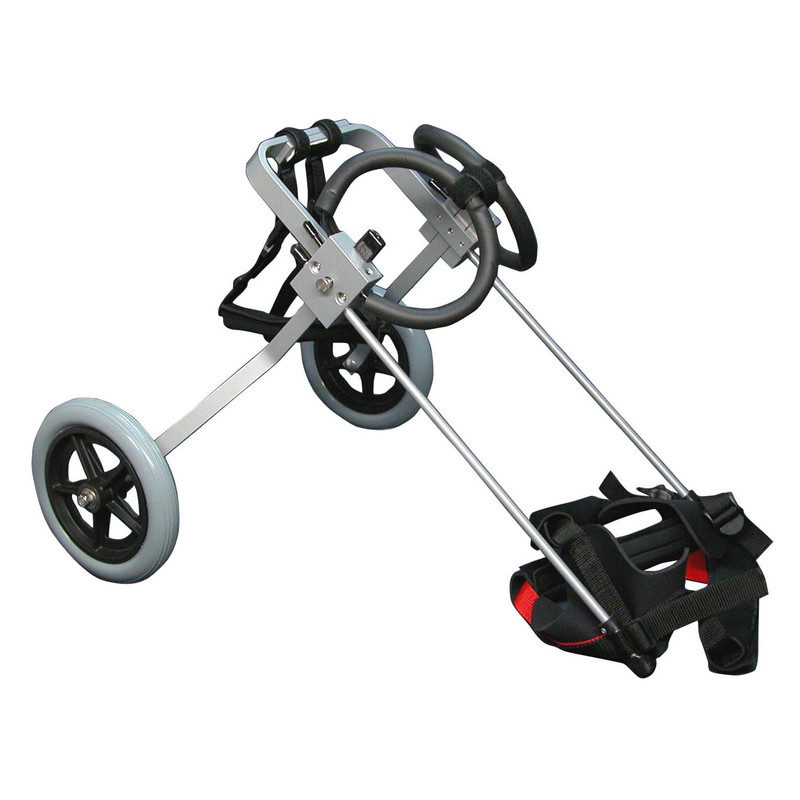
This is technically a medium-dog wheelchair rather than a true small-dog model, so I would only consider it for heavier dogs that fall outside normal small-cart dimensions. It should not be substituted for a small wheelchair simply because a dog is a compact breed.
Key Specifications
- Medium-size dog wheelchair
- Aluminum construction
- Adjustable height, length, and width
- Clip-style harness system
- Rear-support configuration
- All-terrain polyurethane wheels
- Package weight listed at approximately 8 lbs
Pros
- Broad frame adjustability
- Strong aluminum construction
- Straightforward rear-support design
- Large volume of long-term buyer feedback
- Suitable for dogs too large for typical small frames
Cons
- Not appropriate for genuinely tiny dogs
- Heavier than dedicated small-dog carts
- Some owners report unclear assembly instructions
My Experience
I included this model for the edge case: an owner who describes a dog as "small" but whose actual measurements put it beyond the limits of small wheelchairs.
I would never choose this purely by breed label. Measure first. If your dog fits comfortably within an 11-25-pound Walkin' Wheels configuration or another dedicated small cart, one of those lighter options is likely more appropriate.
What Other Buyers Say
Buyers often praise its overall build quality, adjustability, and ability to help dogs with rear-leg problems move again. Ease of assembly also receives positive comments.
The instructions are a recurring weak point, with some users needing extra time to determine correct harness orientation and adjustment.
Best For
Heavier or unusually large-bodied small breeds that measure into medium-wheelchair territory.
➡️➡️➡️ Explore User Feedback and Current Pricing on Amazon
How to Choose the Right Pet Product
Measure your dog rather than relying on breed. Weight is only one part of wheelchair sizing. Rear-leg height, body length, chest width, and overall proportions can affect fit.
Determine which legs require support. Dogs with strong front legs usually use a two-wheel rear-support cart. Dogs experiencing weakness in all four limbs may require a quad wheelchair.
Prioritize a lightweight frame. This is especially important for small dogs because every extra pound represents a larger percentage of their body weight.
Look for adjustability. Adjustable length, width, and height make it easier to position wheels correctly and accommodate changes in condition or body shape.
Check harness comfort. Straps should support the dog without digging into the skin, restricting normal toileting, or creating excessive rubbing.
Consider the terrain. A dog walking mostly inside has different wheel requirements from one regularly traveling across lawns, gravel, or uneven paths.
Think about cleaning. Mobility carts can get dirty quickly, particularly around rear-support straps. Washable harness components and easy-clean wheels are valuable.
Introduce the wheelchair gradually. Some dogs move immediately, while others need short positive sessions before they understand how to balance and turn.
Most importantly, a wheelchair should match the dog's medical and physical needs. I would involve a veterinarian or canine rehabilitation professional when mobility loss is new, worsening, painful, or related to surgery or neurological disease.
FAQs
What size wheelchair does a small dog need?
Use the manufacturer's measurement system rather than choosing by breed alone. Weight, rear-leg height, body length, and sometimes width determine which frame and wheel configuration fits correctly.
Can a small dog go to the bathroom while using a wheelchair?
Many properly fitted rear-support dog wheelchairs are designed to allow urination and defecation while the dog remains in the cart. Harness placement must be correct to avoid interference.
Is a two-wheel or four-wheel wheelchair better for a small dog?
A two-wheel cart is generally intended for dogs with functional front legs and weak rear legs. A four-wheel wheelchair provides additional support when the front limbs are also compromised.
How long does it take a dog to get used to a wheelchair?
It varies considerably. Some dogs begin walking almost immediately, while others need repeated short sessions over several days. Positive reinforcement and a properly adjusted cart can make the transition easier.
Can a dog stay in a wheelchair all day?
A mobility cart is better treated as an assisted exercise and movement device rather than permanent all-day positioning. Dogs need regular rest and skin checks, and usage duration should reflect the dog's health and veterinary guidance.
Conclusion
For most owners searching for the best small dog wheelchair for 2026, my Best Overall pick is the Walkin' Wheels Small Dog Wheelchair 11-25 lbs Blue because its lightweight aluminum frame, extensive adjustability, and small-dog sizing make it unusually versatile.
My Best Value choice is the Best Friend Mobility Small Dog Wheelchair, which provides an adjustable aluminum rear-support system without moving into the highest price tier.
For my Best Premium Choice, I prefer the Walkin' Wheels Small Dog Wheelchair 15-25 lbs Seafoam, particularly for owners who prioritize fine fit adjustment, low frame weight, and an established small-dog wheelchair design.
Whichever model you choose, I would put fit ahead of price, appearance, or brand reputation. Accurate measurements and the right level of body support are what turn a wheelchair from an awkward piece of equipment into a genuinely useful mobility aid.