Top 6 Best Rated Dog Wheelchairs for 2026
When a dog starts losing strength in the back legs because of age, injury, arthritis, neurological problems, or rehabilitation needs, the right wheelchair can make daily movement much easier. I look for a dog wheelchair that provides appropriate support without adding unnecessary weight or restricting normal movement.
For this 2026 guide, I focused on established rear-support and full-support wheelchairs with adjustable frames, practical harness systems, durable wheels, and consistently useful owner feedback. Fit matters more than almost anything else, so I also paid close attention to weight ranges, adjustability, and whether a cart is intended for rear-leg weakness or weakness affecting all four limbs.
Quick Summary
This guide is for owners shopping for mobility assistance for dogs with weakened, injured, or nonfunctional legs. For most dogs whose front legs are still strong, I prefer a lightweight, adjustable two-wheel rear-support cart. Dogs with significant weakness in both their front and rear limbs generally need a four-wheel full-support wheelchair instead.
My top overall recommendation is the Walkin' Wheels Dog Wheelchair Large Dogs 70-180 lbs because of its wide adjustability, lightweight aluminum construction, puncture-resistant wheels, and strong owner feedback. For owners who want full-body assistance for a smaller dog, the Best Friend Mobility Quad model offers support at both ends of the body.
Top Product List
- Walkin' Wheels Dog Wheelchair Large Dogs 70-180 lbs — Best Overall
- Best Friend Mobility Rear Support Wheelchair 2.0 Large — Best Value for Large Dogs
- Walkin' Wheels Dog Wheelchair Medium Dogs 26-49 lbs — Best for Medium Dogs
- Walkin' Wheels Small Dog Wheelchair 11-25 lbs Blue — Best for Small Dogs
- Best Friend Mobility Quad 4-Wheel Full Support Dog Wheelchair Small — Best for Full-Body Support
- Best Friend Mobility Medium Dog Wheelchair — Best Alternative for Medium Dogs
Top 6 Best Rated Dog Wheelchairs for 2026
Walkin' Wheels Dog Wheelchair Large Dogs 70-180 lbs
Short Description
This Walkin' Wheels model is a rear-support wheelchair for large dogs weighing 70 to 180 pounds. I consider it one of the strongest choices for owners who need substantial hind-leg support while their dog still has good front-leg strength.
Key Specifications
- Designed for dogs weighing 70-180 lbs
- Lightweight aluminum frame
- Adjustable height, length, and width
- Dense foam wheels with rubber treads
- Puncture-resistant wheel design
- Washable components
- Folds down for transportation and storage
- Rear-support configuration
Pros
- Broad three-way adjustability
- Strong option for very large dogs
- Lightweight relative to its size
- Wheels suit multiple outdoor surfaces
- Easy to transport compared with rigid carts
- Can accommodate changing fit requirements
Cons
- Costs considerably more than many basic mobility carts
- Correct initial measurements are important
- Large frame may be awkward through narrow spaces
My Experience
What stands out to me is the combination of a lightweight frame and extensive adjustment. Large dogs place substantial loads on mobility equipment, so I would rather have an aluminum frame that provides support without forcing the dog to push excessive cart weight.
The adjustable height, length, and width also make this model more forgiving if a dog's proportions don't perfectly match a standard size. Getting the harness position right may take some patience, but that setup work is important for comfort.
What Other Buyers Say
Recurring positive feedback centers on dogs being able to walk and explore again after losing rear-leg strength. Owners also frequently appreciate the adjustability and the ability to use the cart outdoors.
A recurring challenge is the initial fitting process. Some owners need several adjustments before the wheelchair sits correctly, and the overall size can be cumbersome indoors.
Best For
Large and giant dogs with good front-leg strength but substantial rear-leg weakness or mobility loss.
➤➤➤ Click Here to Check Price on Amazon
Best Friend Mobility Rear Support Wheelchair 2.0 Large
Short Description
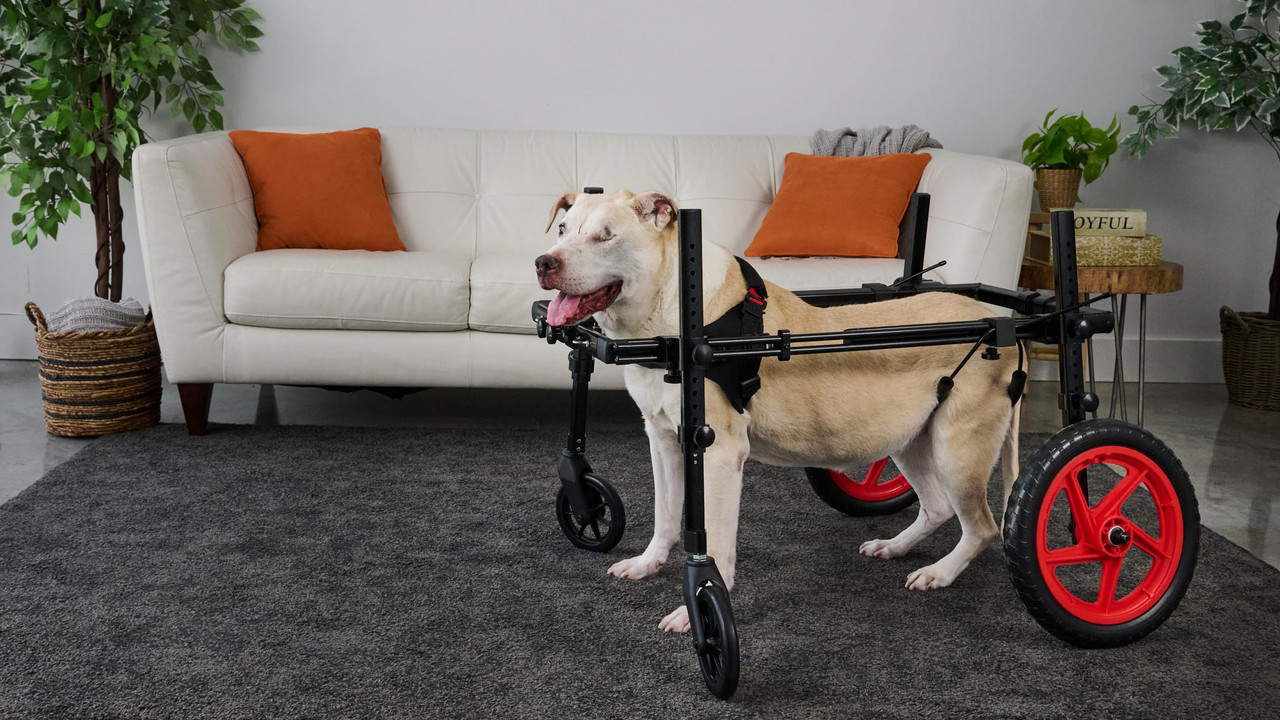
The Rear Support Wheelchair 2.0 is designed for larger dogs that need help supporting their hindquarters. Its updated design emphasizes simple adjustment and tool-free everyday setup.
Key Specifications
- Lightweight adjustable aluminum frame
- Adjustable frame width
- Tool-free adjustment knobs
- Steel clips
- Dense puncture-proof wheels
- Padded front and rear harnesses
- Designed for rear-leg support
- Assembly and disassembly do not require tools
- Requires adequate front-leg strength
Pros
- Competitive alternative to premium carts
- Tool-free adjustments simplify setup
- Padded harness system
- Durable steel connectors
- Easy to dismantle for storage or cleaning
Cons
- Intended primarily for dogs with functional front legs
- Proper harness adjustment still takes time
- Less appropriate when front-leg weakness is also present
My Experience
I particularly like the tool-free adjustment system here. A wheelchair often needs small fit corrections during the first several walks, and being able to make those changes without looking for a hex key makes the process more practical.
The padded harnesses are another important feature because pressure distribution matters during longer mobility sessions.
What Other Buyers Say
Feedback around Best Friend Mobility carts frequently praises their relatively straightforward assembly, manageable frame weight, and ability to restore useful mobility.
Fit is the recurring concern. Owners who measure incorrectly or have unusually proportioned dogs may need extra time to adjust the cart properly.
Best For
Owners of larger dogs who want a capable adjustable rear-support cart at a more value-oriented price point.
➡️➡️➡️ Explore User Feedback and Current Pricing on Amazon
Walkin' Wheels Dog Wheelchair Medium Dogs 26-49 lbs
Short Description
This is the medium-size version of the Walkin' Wheels rear-support system, designed specifically for dogs weighing 26 to 49 pounds.
Key Specifications
- Fits dogs weighing 26-49 lbs
- Aluminum frame
- Adjustable height, width, and length
- Dense foam wheels
- Rubber wheel treads
- Puncture-resistant design
- Washable components
- Rear-support configuration
Pros
- Very flexible sizing adjustments
- Lightweight construction
- Suitable for everyday outdoor walks
- Can accommodate different degrees of rear-leg weakness
- Established design with substantial buyer feedback
Cons
- Premium pricing
- Fitting can require multiple adjustments
- Not intended as complete four-leg support
My Experience
For medium dogs, I think this design offers a useful balance between stability and maneuverability. The wheels aren't excessively large, while the frame still provides considerable adjustability.
I would spend extra time on the initial measurements rather than relying on weight alone. Two dogs of the same weight can have very different leg heights and body lengths.
What Other Buyers Say
Many owners report that their dogs regain considerably more freedom once accustomed to the wheelchair. Positive feedback also mentions performance on trails and slightly rougher surfaces.
Some users find the setup process less intuitive initially, and a small number report that their dog needs a gradual introduction before walking naturally in the cart.
Best For
Medium-size dogs between 26 and 49 pounds that need reliable rear-leg assistance for daily walks and outdoor activity.
➤➤➤ Click Here to Check Price on Amazon
Walkin' Wheels Small Dog Wheelchair 11-25 lbs Blue
Short Description
This compact Walkin' Wheels wheelchair is designed for small pets weighing 11 to 25 pounds and supports the hindquarters while allowing the front legs to propel the cart.
Key Specifications
- Designed for pets weighing 11-25 lbs
- Adjustable height, width, and length
- Rear-support design
- Requires only a small number of measurements for sizing
- Can be converted to four-wheel support with a compatible front attachment
- Intended for small breeds
Pros
- Highly adjustable for small dogs
- Lightweight and maneuverable
- Can adapt if mobility needs change
- Suitable for several popular small breeds
- Compact enough for easier storage
Cons
- More expensive than many basic small-dog carts
- Front support requires an additional component
- Accurate rear-leg measurement remains essential
My Experience
With small dogs, unnecessary wheelchair weight can quickly become a problem. That is why I like the compact Walkin' Wheels platform. It supports the rear without surrounding the dog with an excessively bulky frame.
The option to add front support later is also useful for progressive mobility conditions, although it means additional expense.
What Other Buyers Say
Owners commonly praise the ability of small dogs to regain independent movement once the cart is fitted correctly. Adjustability is frequently highlighted.
The most common frustrations involve sizing and the learning period. Some dogs start moving immediately, while others need short, positive practice sessions before becoming comfortable.
Best For
Dachshunds, Pugs, French Bulldogs, Shih Tzus, and other small dogs in the 11-25-pound range with rear-leg weakness.
➤➤➤ Click Here to Check Price on Amazon
Best Friend Mobility Quad 4-Wheel Full Support Dog Wheelchair Small
Short Description
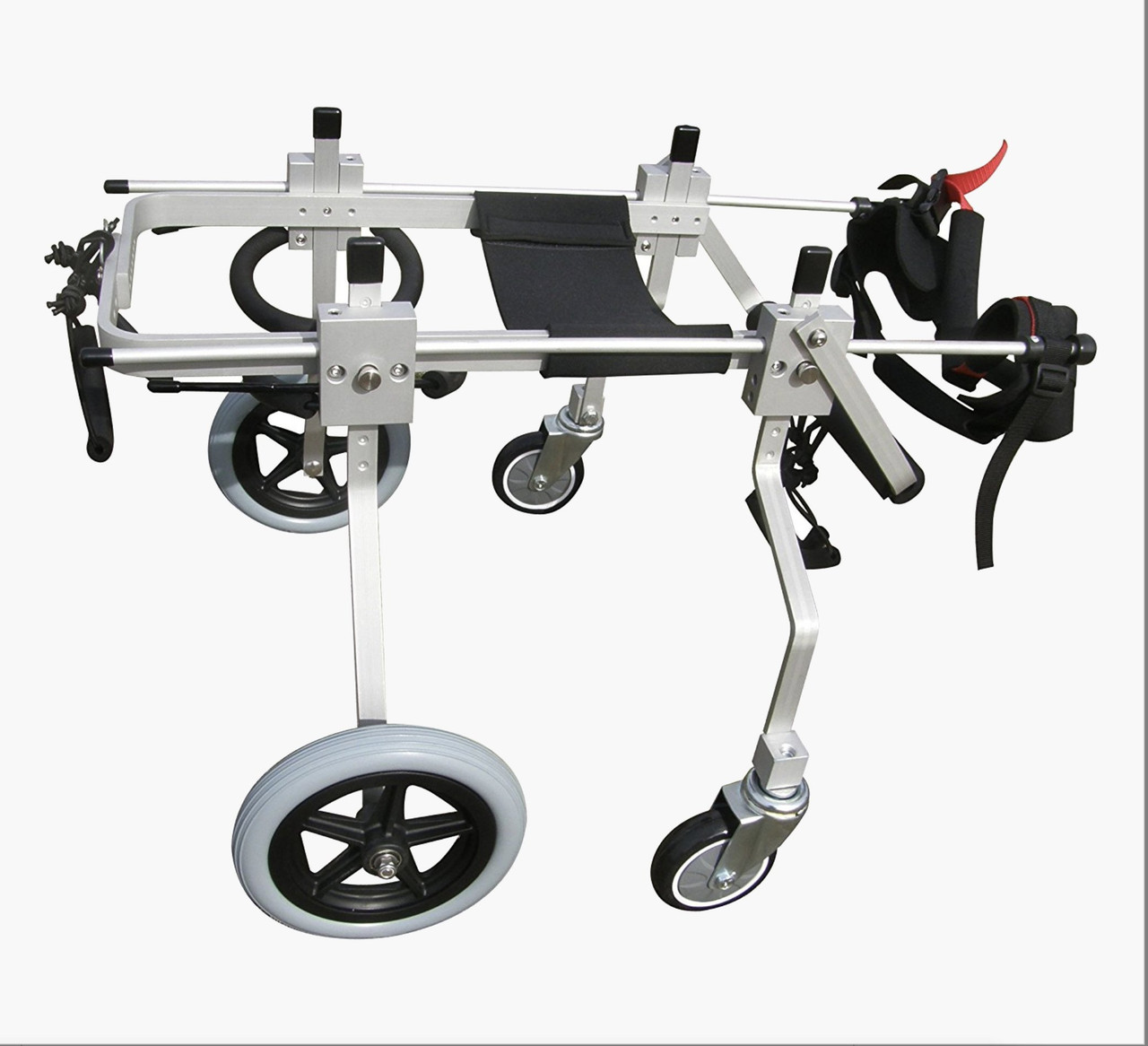
Unlike the two-wheel models above, this Best Friend Mobility wheelchair supports both the front and rear portions of a small dog's body. I would consider a quad cart when weakness is not limited to the hind legs.
Key Specifications
- Four-wheel full-support configuration
- Lightweight non-rust aluminum construction
- Stainless steel hardware
- Adjustable height, length, and width
- Neoprene front and rear support harnesses
- Polyurethane all-terrain wheels
- Sealed wheel bearings
- Paw support slings
Pros
- Supports all four limbs
- Useful for more advanced mobility limitations
- Three-way frame adjustment
- Lightweight aluminum construction
- Front and rear harness support
Cons
- More complex than a two-wheel cart
- Requires careful fitting at both ends of the dog
- Four wheels are less maneuverable in tight indoor spaces
My Experience
I would not choose a quad wheelchair when a dog only needs rear support because the extra frame and front wheels are unnecessary in that situation. However, when front-leg stability is also compromised, the four-wheel design makes much more sense.
I especially value the adjustable frame because full-body alignment is critical when four wheels are supporting the dog.
What Other Buyers Say
Owners using full-support wheelchairs often appreciate the additional stability they provide for dogs unable to rely consistently on either pair of legs.
The tradeoff is a more involved setup. Harness placement and frame dimensions need to be carefully adjusted to keep the dog centered and comfortable.
Best For
Small dogs with significant weakness or instability affecting both the front and rear limbs.
➡️➡️➡️ Explore User Feedback and Current Pricing on Amazon
Best Friend Mobility Medium Dog Wheelchair
Short Description
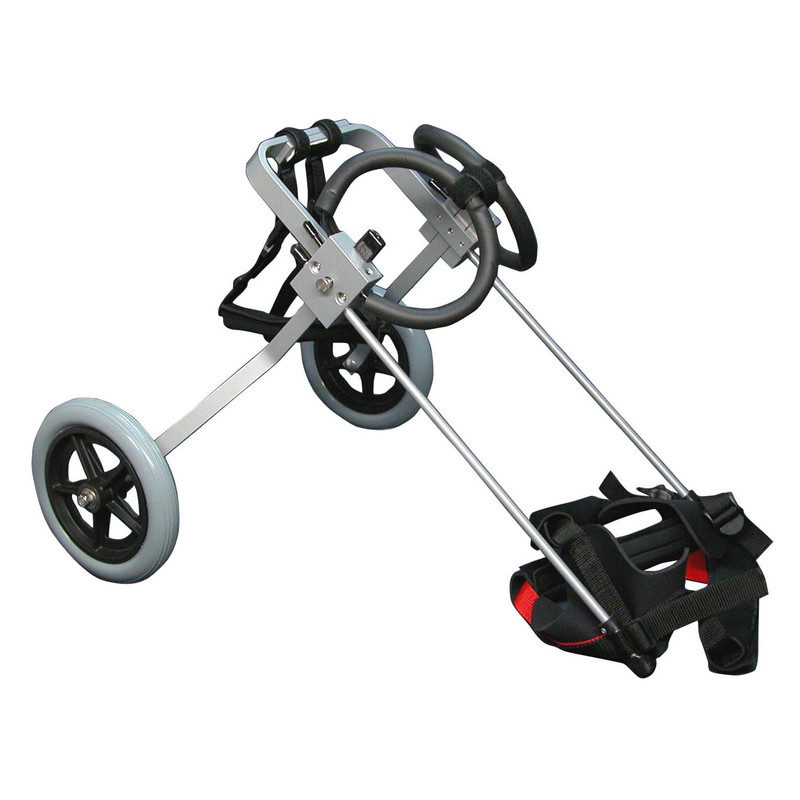
The Best Friend Mobility Medium Dog Wheelchair is another adjustable option for dogs needing rear mobility assistance without moving to a premium-priced system.
Key Specifications
- Lightweight aluminum construction
- Stainless steel hardware
- Adjustable frame
- Neoprene support harness
- Rear-leg support design
- All-terrain polyurethane wheels with sealed bearings
- Paw slings
- Easy-clip front harness system
Pros
- Lightweight frame
- Good adjustability
- Comfortable neoprene support
- Durable wheel hardware
- Useful alternative to more expensive systems
Cons
- Measurement accuracy is important
- Harness fit may require experimentation
- Not intended for dogs requiring four-limb assistance
My Experience
I see this model as a practical middle ground. The aluminum frame keeps weight manageable, while the harness and wheel construction provide the essential features I would want in a daily rear-support wheelchair.
I would choose it primarily for a dog with strong front legs and confirm all measurements before ordering.
What Other Buyers Say
Positive feedback around this style of Best Friend Mobility cart often focuses on improved independence, relatively simple construction, and decent value.
Sizing and harness positioning account for many of the complaints. As with nearly every dog wheelchair, careful measuring makes a major difference.
Best For
Medium dogs whose owners want a straightforward adjustable rear-support wheelchair without paying the highest premium.
➡️➡️➡️ Explore User Feedback and Current Pricing on Amazon
How to Choose the Right Pet Product
Start with your dog's actual mobility problem. A dog with strong front legs but weak or paralyzed rear legs usually needs a two-wheel rear-support wheelchair. If the front legs are also weak, a quad wheelchair may provide more appropriate support.
Measure carefully. Weight alone isn't enough. Rear-leg height, body length, width, and the manufacturer's sizing requirements can determine whether a wheelchair sits comfortably.
I prefer lightweight aluminum frames because the dog must move both its body and the cart. Adjustability in height, length, and width is particularly valuable if your dog's proportions fall between standard sizes.
Look closely at the harness. Padding should distribute pressure without excessive rubbing, especially around the chest and groin. Check the fit after each of the first few walks.
Wheel type also matters. Dense foam or polyurethane wheels are convenient because punctures aren't a concern, while tread helps on grass and uneven surfaces.
Finally, think about where you'll use the wheelchair. Compact carts are easier indoors and during travel. Larger wheels can be useful outdoors but add width. If you regularly transport the wheelchair by car, folding or easy disassembly is worth prioritizing.
FAQs
1. Should I choose a two-wheel or four-wheel dog wheelchair?
A two-wheel cart is normally suitable when the front legs remain strong. A four-wheel wheelchair provides additional support when weakness affects both the front and rear limbs.
2. Can a dog go to the bathroom while using a wheelchair?
Many properly fitted dog wheelchairs are designed so dogs can urinate and defecate while wearing the cart. Correct harness positioning is important so straps do not obstruct normal elimination.
3. How do I know what size wheelchair my dog needs?
Follow the measurements required for the specific model rather than choosing by breed alone. Weight, rear-leg height, body length, and sometimes width are commonly used. Measure twice before ordering.
4. How long does it take a dog to get used to a wheelchair?
Some dogs begin walking almost immediately, while others require several short sessions. I prefer gradual introductions with positive reinforcement instead of expecting long walks on the first day.
5. Can a dog wheelchair be used during rehabilitation?
A wheelchair can sometimes be incorporated into a rehabilitation plan to provide support while a dog exercises, but the appropriate amount of activity depends on the underlying condition. A veterinarian or canine rehabilitation professional should guide its use after surgery or serious injury.
Conclusion
The best dog wheelchair depends primarily on your dog's size and which limbs need assistance.
My Best Overall choice is the Walkin' Wheels Dog Wheelchair Large Dogs 70-180 lbs because its lightweight aluminum frame, broad adjustability, puncture-resistant wheels, and established owner feedback make it an especially capable rear-support system.
For Best Value, I prefer the Best Friend Mobility Rear Support Wheelchair 2.0 Large. Its tool-free adjustment, padded harnesses, aluminum frame, and durable steel clips provide a practical combination of usability and support.
My Best Premium Choice for dogs needing more extensive assistance is the Best Friend Mobility Quad 4-Wheel Full Support Dog Wheelchair Small because it supports both the front and rear portions of the body rather than only the hindquarters.
Whichever model you choose, I would prioritize accurate measurements and appropriate support over price or appearance. A correctly fitted wheelchair that matches your dog's actual mobility needs has a much better chance of making walks safer, easier, and more enjoyable.