Plastic dog crates are useful when I want a rigid, wipe-clean enclosure for vet visits, road trips, and short-term transport. Compared with soft carriers, a hard plastic shell holds its shape better, while plastic is typically easier to clean than fabric after muddy paws, drool, or accidents.
For this 2026 guide, I’m keeping the recommendations strictly to products I can verify as genuinely hard-sided plastic crates or carriers. That leaves one qualifying option rather than six; I’d rather give you one relevant recommendation than pad the list with wire crates, fabric carriers, or unrelated products.
The main things I look for are correct sizing, sturdy construction, ventilation, secure doors and latches, comfortable access, portability, and easy cleaning.
Quick Summary
This guide is primarily for owners of small dogs who want a rigid carrier for vet appointments, driving, or everyday transportation.
For this use, I generally prefer a hard plastic shell with metal doors, plenty of ventilation, and more than one access point. A top-loading door can be especially helpful with dogs that resist entering through a front opening.
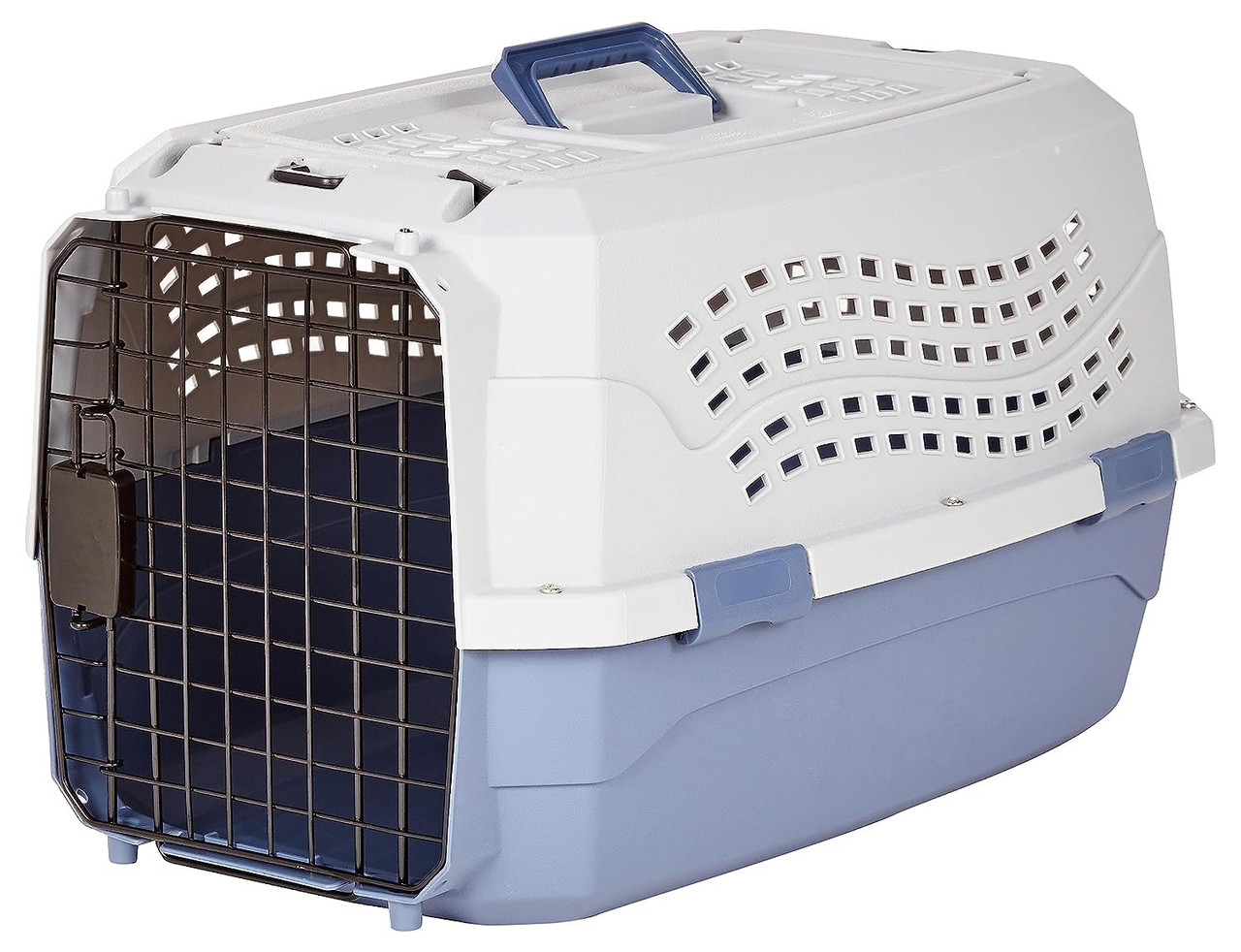
My top overall recommendation is the Amazon Basics Hard-Sided 2-Door Top-Load Pet Travel Carrier. Its rigid plastic body, steel-wire doors, front and top access, and compact dimensions make it a practical choice for smaller dogs.
Top Product List
- Amazon Basics Hard-Sided 2-Door Top-Load Pet Travel Carrier — Best Overall Plastic Crate for Small Dogs
Top 6 Best Plastic Dog Crates for 2026
Amazon Basics Hard-Sided 2-Door Top-Load Pet Travel Carrier
Short Description
The Amazon Basics Hard-Sided 2-Door Top-Load Pet Travel Carrier is designed for transporting smaller pets in a rigid enclosure. I think its biggest advantage over basic front-entry carriers is the combination of a conventional front door and a large top-access door.
That makes it particularly appealing for small dogs that hesitate, back away, or become nervous when owners try to guide them through a narrow front entrance.
Key Specifications
- Hard-sided carrier made with polypropylene plastic and iron components
- Approximate exterior dimensions: 22.83 x 14.96 x 12.99 inches
- Intended for pets in roughly the 12–20 lb range, subject to the dog's actual body dimensions
- Steel-wire front and top doors
- Front and top entry
- Spring-loaded door latches
- Ventilation openings around the carrier
- Top carrying handle
- Upper and lower shell sections are secured together with hardware
- Designed for dogs and cats
Pros
- Rigid plastic body is easier to wipe clean than most fabric carriers
- Front and top doors provide two ways to load a dog
- Top access is particularly useful with reluctant pets
- Steel-wire doors feel more substantial than an all-plastic opening
- Ventilation is distributed around the carrier
- Carrying handle improves portability
- Hard floor provides a stable base
- Compact size works well for vet appointments and car trips
Cons
- Suitable mainly for smaller dogs
- Rigid construction takes up more storage space than a collapsible carrier
- The smooth plastic floor may benefit from a correctly sized non-slip pad
- Top-door operation can take some practice
- Owners occasionally report assembly hardware issues
- Its dimensions should not be assumed to meet airline requirements
My Experience
What stands out to me is how practical the two-door design is. I haven't personally owned or tested this carrier, so I base my assessment on its documented construction and recurring owner feedback rather than pretending to have hands-on experience.
For everyday loading, I would choose the top opening whenever a small dog is uncomfortable walking voluntarily into a crate. Lowering a cooperative dog through the top can be simpler than trying to push or coax it through the front.
I also like the plastic-and-steel combination for cleaning and routine transport. A rigid plastic base doesn't soak up spills in the way a fabric floor can, and the steel-wire doors maintain airflow while letting me see the dog.
Sizing matters more than the suggested weight range, though. A compact, stocky dog and a tall, narrow dog can weigh the same while requiring very different amounts of crate space. I would measure the dog before ordering and make sure it can stand naturally, turn around, and lie down without being compressed.
For comfort, I would also consider adding a thin non-slip crate mat that fits without reducing the dog's usable space too much. Bare molded plastic is convenient for cleaning but isn't necessarily the most comfortable surface for a longer drive.
What Other Buyers Say
Recurring positive feedback centers on sturdiness, straightforward assembly, useful top access, ventilation, and the convenience of having both front and top doors. Owners of nervous cats and small dogs frequently find the top opening easier to use than a standard front-only carrier.
Several buyers also appreciate the carrier's easy-clean plastic construction and describe it as useful for routine vet transportation.
The recurring criticisms are mostly about size and assembly details. Some owners find a particular size smaller than expected, reinforcing why I would measure the dog rather than choosing solely from a weight recommendation. There are also occasional complaints involving missing hardware or difficulty getting used to the top-door mechanism.
Best For
I think this carrier makes the most sense for small dogs needing a rigid crate for vet visits, short road trips, and general transportation. It is especially useful when top-loading access would make getting the dog into the carrier easier.
➤➤➤ Click Here to Check Price on Amazon
How to Choose the Right Pet Product
The best plastic dog crate isn't simply the one with the highest weight rating. I start by looking at the dog's actual body measurements and then consider how the crate will be used.
Pet size and age: A dog should have enough room to stand naturally, turn around, and lie down comfortably. Puppies also grow quickly, so today's perfect fit may become too small.
Product dimensions: I compare exterior and usable interior space rather than relying on labels such as small or medium. Dimensions are particularly important with tall or long-bodied breeds.
Weight capacity: Weight recommendations are helpful, but they don't replace measurements. Two 18-pound dogs can have completely different proportions.
Material: Rigid plastic is practical because it holds its shape and can generally be wiped clean. Metal doors add airflow and visibility while providing a firmer barrier than fabric mesh.
Safety: I look for secure attachment between the top and bottom sections, properly functioning door latches, smooth interior surfaces, and adequate ventilation. I inspect the crate regularly for cracked plastic or damaged hardware.
Comfort: A hard floor is easy to clean but may be slippery. A thin, fitted non-slip mat can make the crate more comfortable as long as it doesn't create a chewing or entanglement hazard for the individual dog.
Durability: Hard-sided carriers work particularly well for dogs that would scratch at fabric. However, no ordinary plastic carrier should automatically be considered escape-proof for a powerful or severely anxious dog.
Cleaning: Removable bedding and accessible plastic surfaces make accident cleanup much easier. This is one reason I often favor plastic for routine transportation.
Portability: Handles, crate weight, and overall size become increasingly important when carrying the dog between a vehicle, parking area, and veterinary clinic.
Adjustability: Plastic crates typically offer little adjustment. Getting the correct size from the beginning is therefore more important than with some expandable or divided enclosures.
Indoor and outdoor use: I consider these carriers primarily transportation and temporary-containment products, not permanent outdoor housing. Dogs still need appropriate temperature control, supervision, exercise, and shelter.
Travel suitability: For road travel, the crate needs to fit securely in the intended vehicle location. For air travel, I never assume that the words "travel carrier" mean airline-approved. Each airline can impose its own current dimensional and construction rules.
Multi-pet use: Each dog should normally have enough individual space rather than squeezing multiple pets into a carrier designed for one animal.
FAQs
1. Is a plastic dog crate better than a wire crate for travel?
For many transportation situations, I prefer plastic because the rigid shell offers more enclosure and doesn't collapse like fabric. Wire crates usually provide more open visibility and airflow, making them popular for home use. The better choice depends on whether the priority is transportation or everyday indoor crating.
2. How do I know what size plastic crate my dog needs?
Measure your dog's standing height and body length rather than relying entirely on weight. The dog should be able to stand, turn around, and lie comfortably without being forced into an unnatural position.
3. Are plastic dog crates good for anxious dogs?
They can be helpful because the solid sides create a more enclosed environment than an open wire crate. However, severe separation anxiety or escape behavior is different from ordinary nervousness. A standard plastic carrier isn't automatically suitable for a dog that aggressively tries to break out.
4. Can I use a plastic dog crate on an airplane?
Possibly, but I would never rely only on a product description. Airline requirements vary according to carrier, route, aircraft, cabin versus cargo travel, and sometimes destination. Confirm the airline's current requirements before buying or traveling.
5. Should I put bedding inside a plastic dog crate?
A thin, correctly sized mat can improve traction and comfort, particularly on a smooth plastic floor. I would avoid excessively thick bedding that reduces usable space, and I wouldn't leave easily shredded bedding with a dog known to chew or swallow fabric.
Conclusion
For anyone searching for the best plastic dog crates for 2026, I would focus first on correct fit, rigid construction, secure doors, ventilation, ease of cleaning, and practical access.
I am not naming a separate Best Premium Choice because I don't have another qualifying plastic crate here that I can verify confidently enough to recommend. Rather than substitute a wire or soft-sided model merely to reach six products, I would choose the Amazon Basics carrier when its dimensions provide an appropriate fit for the dog.
ChatGPT can make mistakes. Check important info.#### Latest response