When a dog begins losing strength in the rear legs—or needs support across all four limbs—the right wheelchair can make everyday movement much easier. I look for a secure fit, low frame weight, comfortable harnessing, useful adjustability, wheels suited to real outdoor surfaces, and a design that matches the pet’s actual mobility needs.
A wheelchair is a mobility aid rather than a treatment for the condition causing weakness. Before choosing one, I recommend having a veterinarian evaluate sudden or progressive mobility loss and confirm whether rear-only or full-body support is appropriate.
Quick Summary
This guide is mainly for owners of dogs with hind-leg weakness, paralysis, age-related mobility problems, injuries, or rehabilitation needs. Rear-support wheelchairs work best when the dog still has dependable front-leg strength. Dogs that also struggle at the front generally need a four-wheel full-support cart.
My top overall recommendation is the Walkin' Wheels Dog Wheelchair Large Dogs 70-180 lbs because its aluminum frame adjusts in height, length, and width, uses puncture-resistant wheels, and has a strong track record among owners of large mobility-impaired dogs. Walmart
Top Product List
- Walkin' Wheels Dog Wheelchair Large Dogs 70-180 lbs — Best Overall
- Best Friend Mobility Rear Support Wheelchair 2.0 Large — Best Value for Large Dogs
- Walkin' Wheels Dog Wheelchair Medium Dogs 26-49 lbs — Best for Medium Dogs
- Best Friend Mobility Quad 4-Wheel Full Support Dog Wheelchair Small — Best Full-Support Choice
- Best Friend Mobility Small Dog Wheelchair — Best for Small Dogs
- Best Friend Mobility PRO Dog Wheelchair Medium-XL — Best Premium Choice
Top 6 Best Pet Wheelchairs for 2026
Walkin' Wheels Dog Wheelchair Large Dogs 70-180 lbs
Short Description
This is the model I would consider first for a large dog that has good front-leg strength but needs dependable hind-end support. Its extensive adjustment range makes it easier to fine-tune than many fixed-size carts.
Key Specifications
- Designed for dogs weighing 70–180 lbs
- Lightweight aluminum frame
- Adjustable height, length, and width
- Dense-foam wheels with rubber treads
- Puncture-resistant wheel design
- Washable components
- Designed to fold down for transport and storage Walmart
Pros
- Excellent adjustability for different body proportions
- Suitable for large and giant dogs
- Wheels are practical for varied outdoor surfaces
- Foldable design is easier to transport
- Strong owner feedback overall Walmart
Cons
- More expensive than many basic rear-support carts
- Getting the initial measurements and fit right takes care
- Large dogs may require a second person during fitting
My Experience
What stands out to me is the three-way adjustment. With mobility equipment, proper geometry matters almost as much as the materials, and being able to change height, length, and width gives owners more control over positioning.
I would spend extra time on the first fitting rather than rushing it. Once adjusted properly, the aluminum construction and large wheels make this one of the more practical designs for everyday walks.
What Other Buyers Say
Recurring feedback is positive about restored mobility and the ability to use the wheelchair over grass, trails, and other uneven surfaces. Complaints are more likely to concern sizing or the time needed to achieve the right fit rather than the basic concept of the cart. Walmart
Best For
Large dogs from 70 to 180 pounds that have rear-leg weakness while retaining good front-leg strength.
➤➤➤ Click Here to Check Price on Amazon
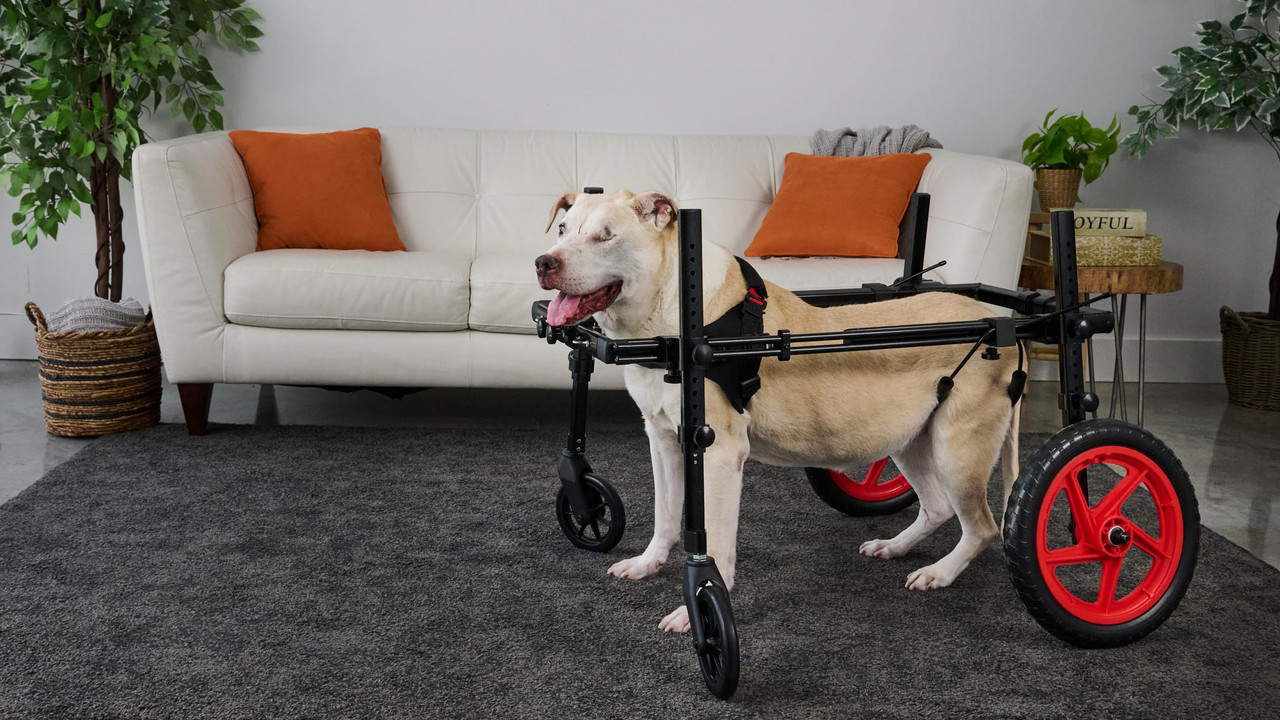
Best Friend Mobility Rear Support Wheelchair 2.0 Large
Short Description
This large rear-support cart emphasizes easier adjustments and a comfortable harness system while costing less than some premium competitors.
Key Specifications
- Rear-support wheelchair for large dogs
- Adjustable aluminum frame
- Tool-free adjustment knobs
- Adjustable frame width
- Steel clips
- Padded front and rear harnesses
- Dense puncture-resistant wheels intended for varied surfaces
 Best Friend Mobility
Pros
- Tool-free adjustments simplify fitting
- Lightweight aluminum construction
- Padded harnesses help distribute support
- Good balance between features and cost
- Adjustable width accommodates different builds
Cons
- Intended for dogs with adequate front-leg strength
- Precise measurement is still important
- Less established buyer-feedback volume than some long-running models
My Experience
I like the tool-free adjustment approach because small fit corrections are much less frustrating when they do not require repeatedly reaching for a wrench. The padded harness design is another feature I value because the contact points matter during routine walks.
What Other Buyers Say
Feedback around Best Friend Mobility carts commonly praises their ability to restore useful everyday movement, while fit and assembly remain the areas where owners most often need patience.
Best For
Large dogs whose owners want an adjustable rear-support wheelchair without moving into the highest price tier.
➡️➡️➡️ Explore User Feedback and Current Pricing on Amazon
Walkin' Wheels Dog Wheelchair Medium Dogs 26-49 lbs
Short Description
This is my preferred option for medium dogs because it combines broad adjustment with a lighter aluminum frame and puncture-resistant wheels.
Key Specifications
- Designed for dogs weighing 26–49 lbs
- Adjustable height, length, and width
- Aluminum frame
- Dense-foam wheels with rubber treads
- Puncture-resistant tires
- Washable components
- Designed for easier travel and storage Walmart
Pros
- Excellent fit adjustment
- Good weight range for medium breeds
- Handles multiple outdoor surfaces
- Easier to store than a rigid cart
- Strong positive owner feedback
Cons
- Costs more than many entry-level wheelchairs
- Straps may require occasional readjustment
- Correct sizing still matters despite the adjustable frame
My Experience
For a medium dog, I particularly like the balance between frame strength and adjustability. The ability to change all three major frame dimensions reduces the chance of being locked into an awkward configuration.
What Other Buyers Say
Owners frequently mention dogs becoming more mobile and active after adapting to the cart. Some have reported successful use on rougher walking trails. Negative comments tend to focus on fit, straps, or occasional hardware and assembly frustrations. Walmart
Best For
Medium dogs weighing roughly 26–49 pounds that need rear-leg assistance for regular walks and outdoor activity.
➤➤➤ Click Here to Check Price on Amazon
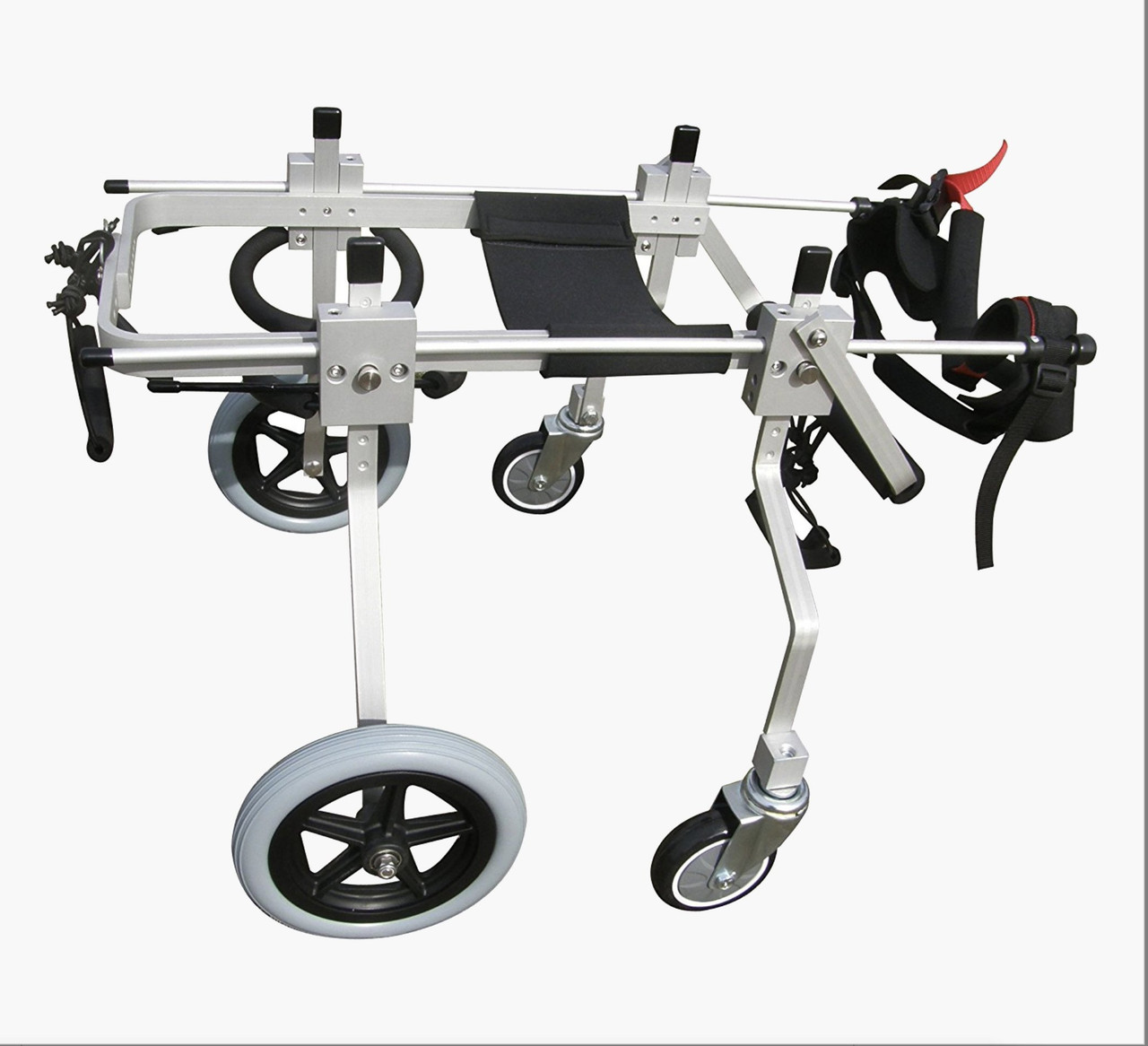
Best Friend Mobility Quad 4-Wheel Full Support Dog Wheelchair Small
Short Description
Unlike rear-only carts, this four-wheel model is designed to provide support at both ends. I would consider it when a small pet has weakness affecting the front as well as the rear.
Key Specifications
- Four-wheel full-support configuration
- Designed for small pets
- Front and rear body support
- Adjustable fitting components
Pros
- Supports both front and rear limbs
- Better suited to pets that cannot rely solely on their front legs
- Four-wheel configuration provides more comprehensive support
- Can accommodate more complex mobility limitations
Cons
- More complicated to fit than a two-wheel rear cart
- More hardware surrounds the pet
- Some buyer feedback reports harness or clip concerns
 Desertcart
My Experience
I would choose a quad wheelchair for a different reason than a conventional rear cart. Its value is comprehensive support, not simplicity. Because more straps and contact points are involved, I would inspect the harness fit carefully during every early session.
What Other Buyers Say
Feedback is mixed. Some owners report straightforward assembly and useful support for dogs with weakness affecting several limbs, while others have complained about harness security or fit. That makes careful setup especially important with this model. Desertcart
Best For
Small pets that require meaningful support for both their front and rear limbs.
➡️➡️➡️ Explore User Feedback and Current Pricing on Amazon
Best Friend Mobility Small Dog Wheelchair
Short Description
This lightweight rear-support option is designed specifically around smaller dogs and is a sensible alternative when a large adjustable cart would be unnecessarily bulky.
Key Specifications
- Rear-support design
- Small-dog sizing
- Lightweight adjustable aluminum frame
- Stainless hardware
- Neoprene front and rear harness
- Adjustable height, length, and width
- Polyurethane wheels with sealed bearings Best Friend Mobility
Pros
- Lightweight construction
- Multiple fit adjustments
- Comfortable neoprene support areas
- Allows rear legs to be supported completely when needed
- Compact relative to large-dog carts
Cons
- Requires good front-leg strength
- Small dogs with unusual proportions can be difficult to fit
- Buyer experiences with comfort and sizing vary
My Experience
With a small dog, I care particularly about unnecessary frame weight. The aluminum construction helps, while the adjustable dimensions provide more flexibility than a fixed-frame cart.
I would still measure carefully rather than choosing solely by weight.
What Other Buyers Say
Positive reviews frequently describe improved movement and relatively easy use. Other buyers mention sizing difficulties or the need to modify the fit for very small animals. 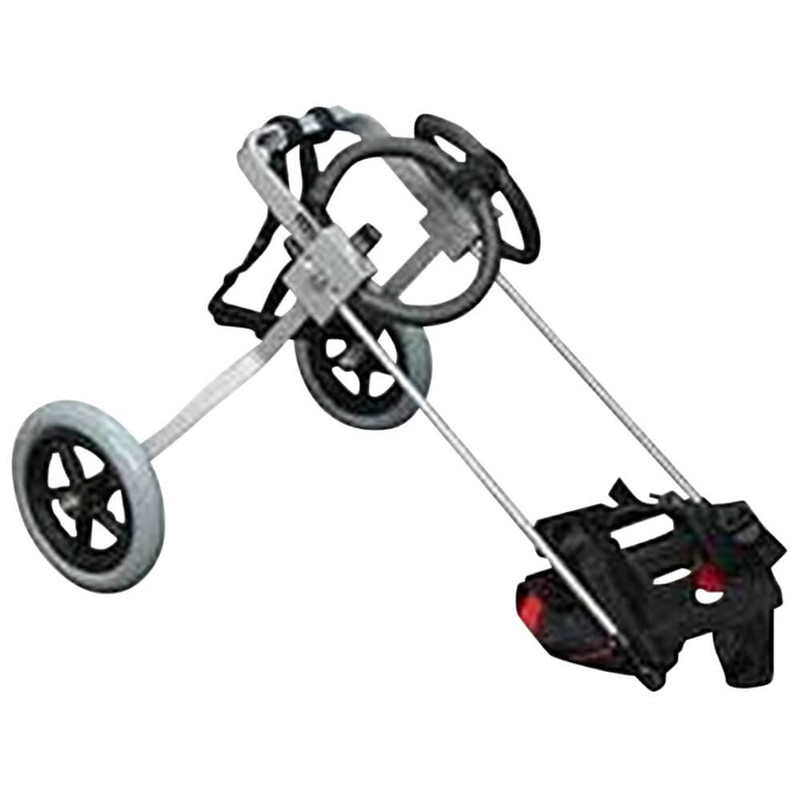 Chewy
Chewy
Best For
Small dogs with rear-leg weakness and enough front-body strength to pull a two-wheel mobility cart comfortably.
➡️➡️➡️ Explore User Feedback and Current Pricing on Amazon
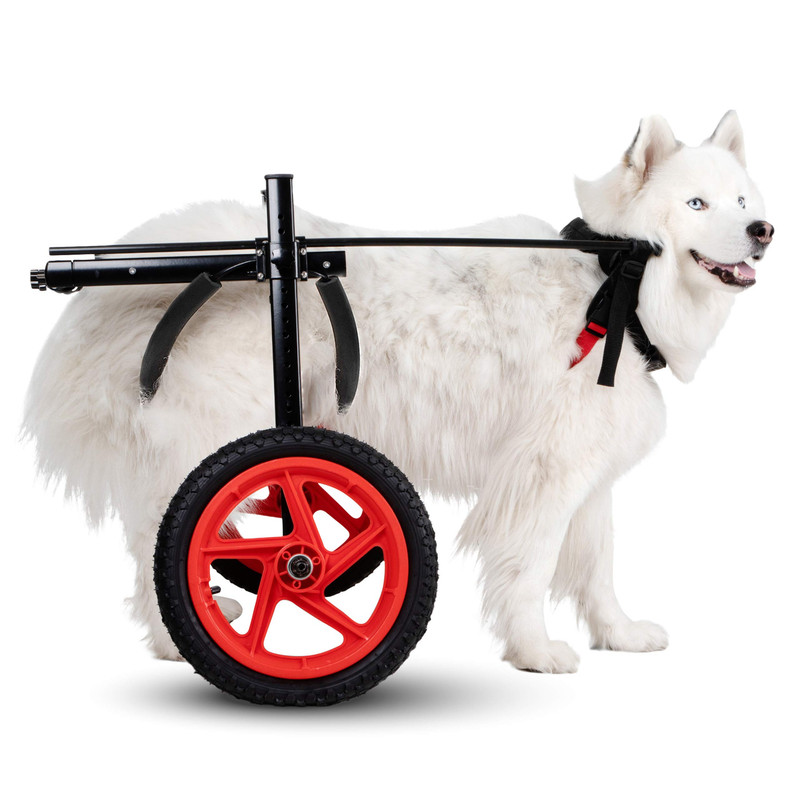
Best Friend Mobility PRO Dog Wheelchair Medium-XL
Short Description
The PRO is the model I would choose when adjustability, portability, and upgraded construction are higher priorities than keeping the price as low as possible.
Key Specifications
- Rear-support wheelchair
- Medium through XL size options
- Aircraft-grade 6061 aluminum used in the frame system
- Adjustable height, width, and length
- Dense all-terrain wheels
- Padded shoulder support
- Adjustable neoprene shoulder harness
- Padded rear support
- Folds flat for transportation
- Washable components
- Can be converted to full quad support with a compatible conversion system Best Friend Mobility
Pros
- Highly adjustable
- Premium frame materials
- Comfortable padded contact areas
- Folds for storage and transportation
- Upgrade path to full support
Cons
- Higher price than a basic rear cart
- Initial fitting can take time
- A heavy dog may require two people to position comfortably
- Some owners report concerns involving instructions or hardware
 Eat Create Sleep
My Experience
The feature I find most useful is the ability to adjust the frame and then fold it for transportation. For owners who regularly drive to rehabilitation appointments, parks, or trails, that matters.
I also like that the rear-support configuration can be upgraded if a dog later requires more extensive support.
What Other Buyers Say
Owners tend to appreciate the adjustability, padded support, and mobility the cart provides. Recurring criticisms include assembly instructions, achieving the correct harness fit, and the effort required to place larger dogs into the frame. Eat Create Sleep
Best For
Owners who want a premium, adjustable rear-support wheelchair with better transportability and an upgrade path to four-wheel support.
➡️➡️➡️ Explore User Feedback and Current Pricing on Amazon
How to Choose the Right Pet Product
Start with your pet’s mobility pattern. If only the rear legs are weak and the front end remains strong, a two-wheel rear-support cart is usually the more straightforward design. A dog that cannot reliably support itself with the front legs may require full four-wheel support.
Measure instead of guessing from breed. Weight is useful, but body proportions can differ dramatically between dogs of the same weight. Rear-leg height, body length, width, and the measurements required by the individual manufacturer are more useful for achieving a safe fit.
Prioritize adjustability. I favor wheelchairs that allow meaningful height, length, and width changes. Adjustment becomes especially useful for rehabilitation, unusual body shapes, and dogs sitting close to the boundary between sizes.
Consider frame weight and wheel design. The pet has to move the cart, so lighter aluminum frames can make sense. For outdoor use, puncture-resistant or durable all-terrain wheels reduce maintenance.
Inspect every contact point. Harnesses should support without digging into the skin or restricting natural movement. Check frequently for redness or rubbing when introducing any wheelchair.
Think about cleaning and travel. Washable harness components, removable wheels, and frames that fold down are much more convenient if the wheelchair will be used every day.
Introduce the wheelchair gradually. Some dogs move confidently almost immediately, while others need short sessions and positive reinforcement before they understand how to maneuver.
FAQs
1. Should I choose a two-wheel or four-wheel pet wheelchair?
Choose rear two-wheel support when the pet has strong, dependable front legs. A four-wheel wheelchair is more appropriate when weakness affects both the front and rear limbs. A veterinarian or rehabilitation professional can help determine how much support your pet needs.
2. How do I know whether a dog wheelchair fits correctly?
The frame should keep the dog in a natural standing position without forcing the shoulders or spine into an unusual angle. Harnesses should be secure without chafing, and the wheels should sit in the position specified by the manufacturer.
3. Can a dog go to the bathroom while wearing a wheelchair?
Many well-designed rear-support dog wheelchairs are specifically configured to allow urination and bowel movements while the dog remains in the cart. Exact harness positioning is important.
4. Can pet wheelchairs be used outside?
Yes, many models use all-terrain or puncture-resistant wheels intended for grass, paths, and other outdoor surfaces. Very rough ground, steep slopes, stairs, and slippery surfaces still require close supervision.
5. How long does it take a dog to get used to a wheelchair?
There is no universal adjustment period. Some dogs begin moving comfortably very quickly, while others need several short introductory sessions. I would prioritize calm, supervised practice rather than forcing long sessions at the beginning.
Conclusion
For the Best Overall choice, I would pick the Walkin' Wheels Dog Wheelchair Large Dogs 70-180 lbs. Its broad adjustment range, lightweight aluminum construction, puncture-resistant wheels, and strong buyer feedback make it an especially complete option for large dogs.
My Best Value choice is the Best Friend Mobility Rear Support Wheelchair 2.0 Large, particularly for owners who want useful adjustability and padded support without immediately moving to the highest-priced model.
For the Best Premium Choice, I prefer the Best Friend Mobility PRO Dog Wheelchair Medium-XL because of its highly adjustable frame, padded support system, fold-flat portability, and ability to transition toward full-support use.
For any pet wheelchair in 2026, I would put correct sizing and the pet’s specific mobility pattern ahead of brand or price. A properly selected and carefully fitted cart is far more valuable than simply buying the most expensive model.