When a dog loses strength in the rear legs—or needs broader support during rehabilitation—the right wheelchair can make everyday movement much easier. I look for a cart that fits securely, distributes weight comfortably, rolls smoothly, and gives owners enough adjustment to accommodate their dog's body shape.
For my 2026 picks, I focused especially on frame adjustability, harness comfort, wheel construction, ease of setup, portability, and whether the wheelchair supports only the rear legs or all four limbs. Proper sizing matters as much as the brand: a well-made cart can still perform poorly when the height, width, or harness position is wrong.
Quick Summary
This guide is for owners of dogs dealing with hind-leg weakness, reduced mobility, paralysis, injury recovery, or age-related mobility problems. A rear-support wheelchair is generally the most practical choice when a dog still has good front-leg strength, while a four-wheel cart makes more sense when the front legs also need assistance.
My top overall recommendation is the Walkin' Wheels Dog Wheelchair Large Dogs 70-180 lbs for large dogs because its frame adjusts in height, length, and width, uses puncture-resistant wheels, and has a well-established rear-support design. Walmart
Top Product List
- Walkin' Wheels Dog Wheelchair Large Dogs 70-180 lbs — Best Overall
- Best Friend Mobility Rear Support Wheelchair 2.0 Large — Best Value
- Walkin' Wheels Dog Wheelchair Medium Dogs 26-49 lbs — Best for Medium Dogs
- Best Friend Mobility PRO Dog Wheelchair Medium-XL — Best Upgradeable Design
- Best Friend Mobility Quad 4-Wheel Full Support Dog Wheelchair Small — Best Full-Support Wheelchair
- Best Friend Mobility Small Dog Wheelchair — Best for Small Dogs
Top 6 Best Dog Wheelchairs Reviews for 2026
Walkin' Wheels Dog Wheelchair Large Dogs 70-180 lbs
Short Description
This Walkin' Wheels cart is designed for large dogs that have impaired rear-leg mobility but retain enough front-leg strength to propel themselves. I consider it the strongest all-around option here for big breeds because of its unusually broad adjustment range and established modular design.
Key Specifications
- Designed for dogs weighing 70–180 lbs
- Lightweight aluminum frame
- Adjustable height, length, and width
- Dense-foam wheels with rubber treads
- Puncture-resistant, all-terrain wheel design
- Washable components
- Rear-support configuration
- Multiple rear-leg-height configurations are available Walmart
Pros
- Excellent adjustability for large breeds
- Durable but relatively lightweight frame
- Wheels work on varied surfaces
- Folds down for transport and storage
- Established replacement and accessory ecosystem
Cons
- Considerably more expensive than basic mobility carts
- Wide frame can be inconvenient in tight indoor spaces
- Correct measurement is essential
My Experience
What stands out to me is the amount of adjustment. Rather than relying mainly on a dog's weight, I can evaluate height, width, and length separately, which gives owners more room to correct the fit.
I also like the combination of an aluminum frame and non-pneumatic wheels. There is no tire inflation to manage, and buyer feedback commonly highlights renewed mobility once the cart is fitted correctly. Fit remains the main challenge, particularly for very large or unusually proportioned dogs. Walmart
What Other Buyers Say
Buyer feedback is generally positive about mobility, construction, and the ability to use the wheelchair outdoors. Some owners report an adjustment period or difficulty achieving the ideal harness position. The large model has also received strong overall retailer ratings, although fit-related complaints reinforce the importance of measuring carefully. Walmart
Best For
Large dogs with weak or nonfunctional rear legs that still have dependable front-leg strength.
➤➤➤ Click Here to Check Price on Amazon
Best Friend Mobility Rear Support Wheelchair 2.0 Large
Short Description
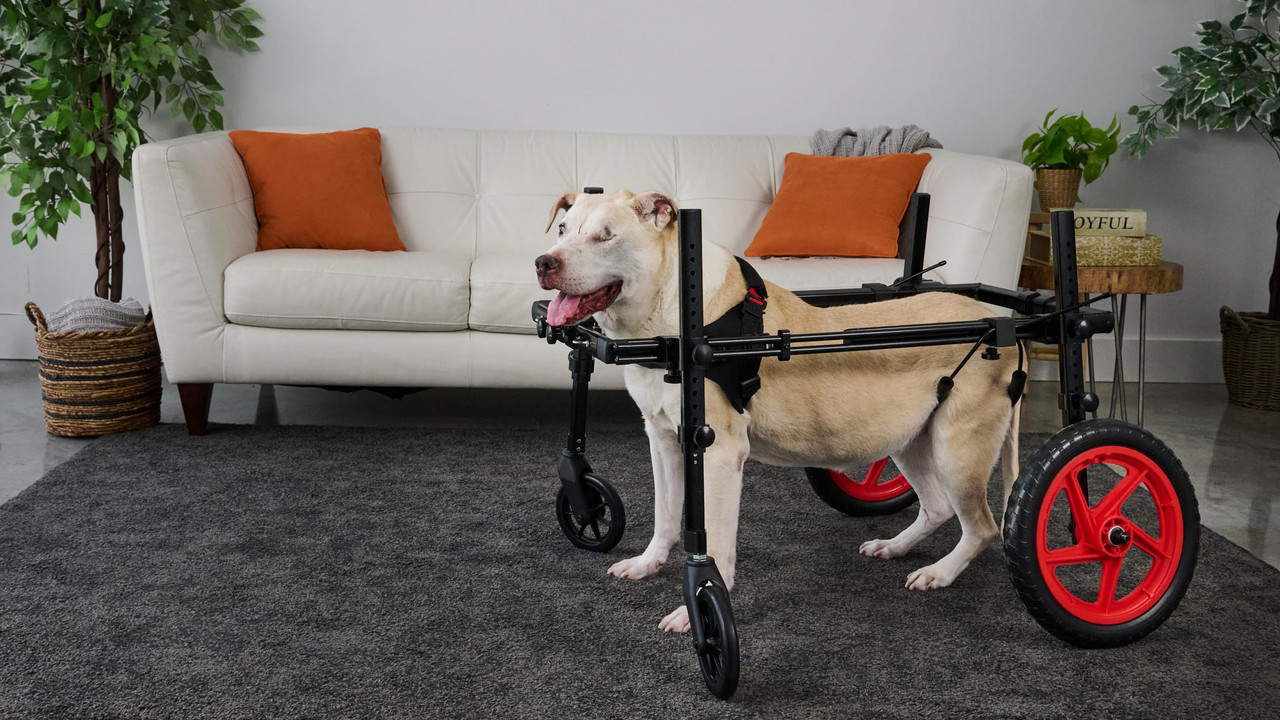
This is a rear-support cart aimed at larger dogs that need help supporting their hindquarters. I like it as a value-oriented alternative because Best Friend Mobility combines an adjustable aluminum frame with tool-free controls and padded harnesses.
Key Specifications
- Rear-support design
- Adjustable aluminum frame
- Adjustable width
- Tool-free adjustment knobs
- Dense puncture-proof wheels
- Padded front and rear harnesses
- Steel attachment clips
- Intended for dogs with normal front-leg strength
 Best Friend Mobility
Pros
- Tool-free adjustments simplify fitting
- Strong value compared with many premium carts
- Padded harness system
- Suitable for varied outdoor surfaces
- Steel clips improve connection durability
Cons
- Fit can still be challenging for some body shapes
- Rear-support design is inappropriate when front legs are also weak
- Some owners report difficulty positioning larger dogs correctly
My Experience
I see the 2.0 design as particularly useful for owners who expect to make small adjustments after the initial fitting. Tool-free knobs are easier to work with than repeatedly reaching for a hex wrench.
The padded supports are also important because pressure distribution becomes a major consideration during regular use. I would spend extra time adjusting this model before taking a long walk; buyer reports suggest that an imperfect fit is the most common source of frustration. Best Friend Mobility
What Other Buyers Say
Positive feedback frequently centers on restored mobility and the concept's usefulness for dogs with weak hind legs. Complaints tend to involve sizing, harness positioning, or difficulty getting the cart properly adjusted for certain large dogs. eBay
Best For
Owners who want an adjustable large-dog rear-support wheelchair without moving straight to the highest-priced option.
➡️➡️➡️ Explore User Feedback and Current Pricing on Amazon
Walkin' Wheels Dog Wheelchair Medium Dogs 26-49 lbs
Short Description
This medium Walkin' Wheels model delivers the same basic adjustable rear-support concept as the large version but is proportioned for dogs in the 26–49-pound range.
Key Specifications
- Fits dogs weighing 26–49 lbs
- Adjustable height, length, and width
- Aluminum frame
- Dense-foam wheels with rubber tread
- Puncture-resistant tires
- Washable components
- Can accept a front attachment for additional support Walmart
Pros
- Broad three-way adjustment
- Good choice for many medium breeds
- Puncture-resistant wheels
- Can adapt if mobility needs change
- Packs relatively flat for storage
Cons
- Premium price
- Initial adjustment can take time
- Straps may require periodic readjustment
My Experience
For a medium dog, I particularly value the ability to adjust three dimensions instead of relying on a fixed frame. It gives owners more flexibility with dogs that are stocky, long-backed, or between typical breed proportions.
I also like that the system can be expanded with front support rather than necessarily replacing the entire rear cart if a dog's needs change. Walkin' Pets
What Other Buyers Say
Owners commonly praise the freedom of movement their dogs regain after adapting to the cart. Retail feedback also includes dogs using the wheelchair on trails and rougher ground. Less favorable reports mention adjustment, hardware, or strap-related concerns. Walmart
Best For
Medium dogs with hind-leg weakness whose owners want extensive adjustability and future expansion options.
➤➤➤ Click Here to Check Price on Amazon
Best Friend Mobility PRO Dog Wheelchair Medium-XL
Short Description
The Best Friend Mobility PRO is an adjustable rear-support system designed for a broad range of dogs, with a key advantage: it can later be converted into a four-wheel full-support configuration.
Key Specifications
- Rear-support wheelchair
- Multiple size configurations
- Tool-free adjustment knobs
- Padded rear harness
- Adjustable shoulder harness
- Dense all-terrain wheels
- Fold-flat design
- Washable components
- Compatible with the Pro Series quad conversion system Best Friend Mobility
Pros
- Expandable to four-wheel support
- Easy adjustment system
- Comfortable padded contact areas
- Folds flatter for transportation
- Wide range of applications
Cons
- Quad conversion components cost extra
- Rear mode requires adequate front-leg strength
- More features mean more fitting variables to check
My Experience
I would choose the PRO when changing mobility needs are a serious consideration. Being able to start with rear support and later add front support is more practical than purchasing an entirely new wheelchair.
For everyday use, the tool-free adjustments and folding frame are the features I would appreciate most. They reduce the hassle of making fit corrections and transporting the cart in a vehicle. Best Friend Mobility
What Other Buyers Say
Feedback on Best Friend Mobility carts frequently credits them with helping dogs move independently again, while fitting and assembly generate the most mixed reactions. Owners should expect an initial setup period rather than assuming the wheelchair will be perfectly adjusted straight from the box. 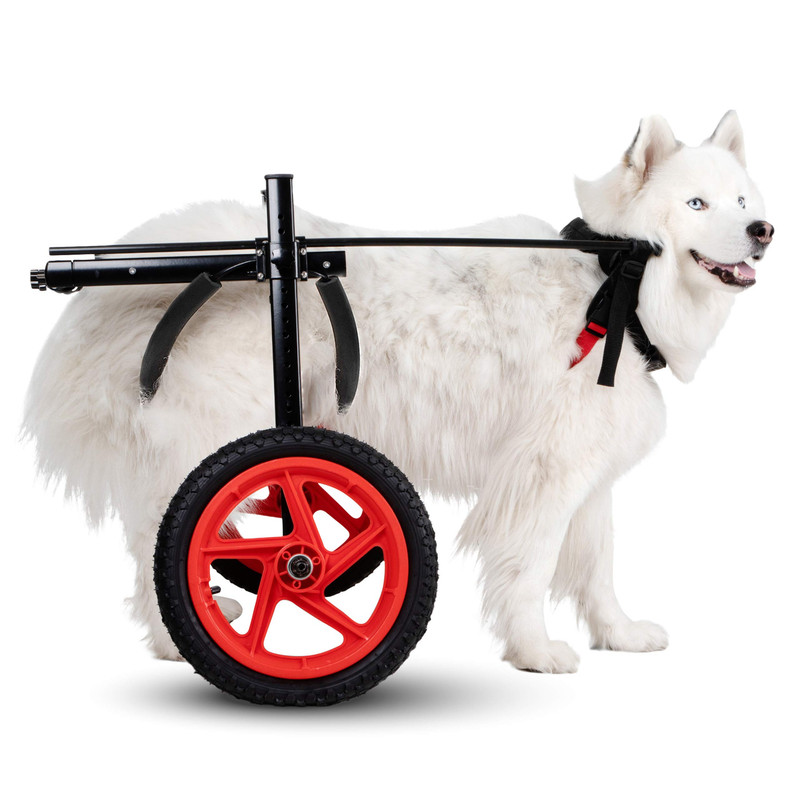 Chewy
Chewy
Best For
Dogs whose mobility may decline over time and owners who want the option to move from rear support to four-wheel support.
➡️➡️➡️ Explore User Feedback and Current Pricing on Amazon
Best Friend Mobility Quad 4-Wheel Full Support Dog Wheelchair Small
Short Description
Unlike conventional rear carts, this four-wheel wheelchair supports both the front and rear portions of the body. That makes it the most specialized choice in my six picks.
Key Specifications
- Four-wheel full-support configuration
- Lightweight non-rust aluminum construction
- Stainless-steel hardware
- Adjustable height, length, and width
- Neoprene front and rear harnesses
- Polyurethane all-terrain wheels with sealed bearings
- Paw slings
- Easy-clean rear harness Best Friend Mobility
Pros
- Supports all four limbs
- Highly adjustable frame
- All-terrain wheel construction
- Padded harnesses
- More stability for dogs with front and rear weakness
Cons
- More complex than a two-wheel cart
- Proper fitting is especially important
- Buyer feedback about assembly and sizing is mixed
My Experience
I would not treat a quad wheelchair as simply a "better" rear wheelchair. It solves a different problem. When a dog's front legs are unstable too, four-wheel support can provide stability that a two-wheel cart cannot.
The tradeoff is complexity. There are more support points to align, so I would be especially careful about harness tension, paw placement, and keeping the dog's body level. Best Friend Mobility
What Other Buyers Say
Some owners report that the quad system allowed dogs with severe weakness to move again when two-wheel designs did not work. Complaints include complicated assembly, sizing difficulties, and harness or clip concerns, making careful setup particularly important. 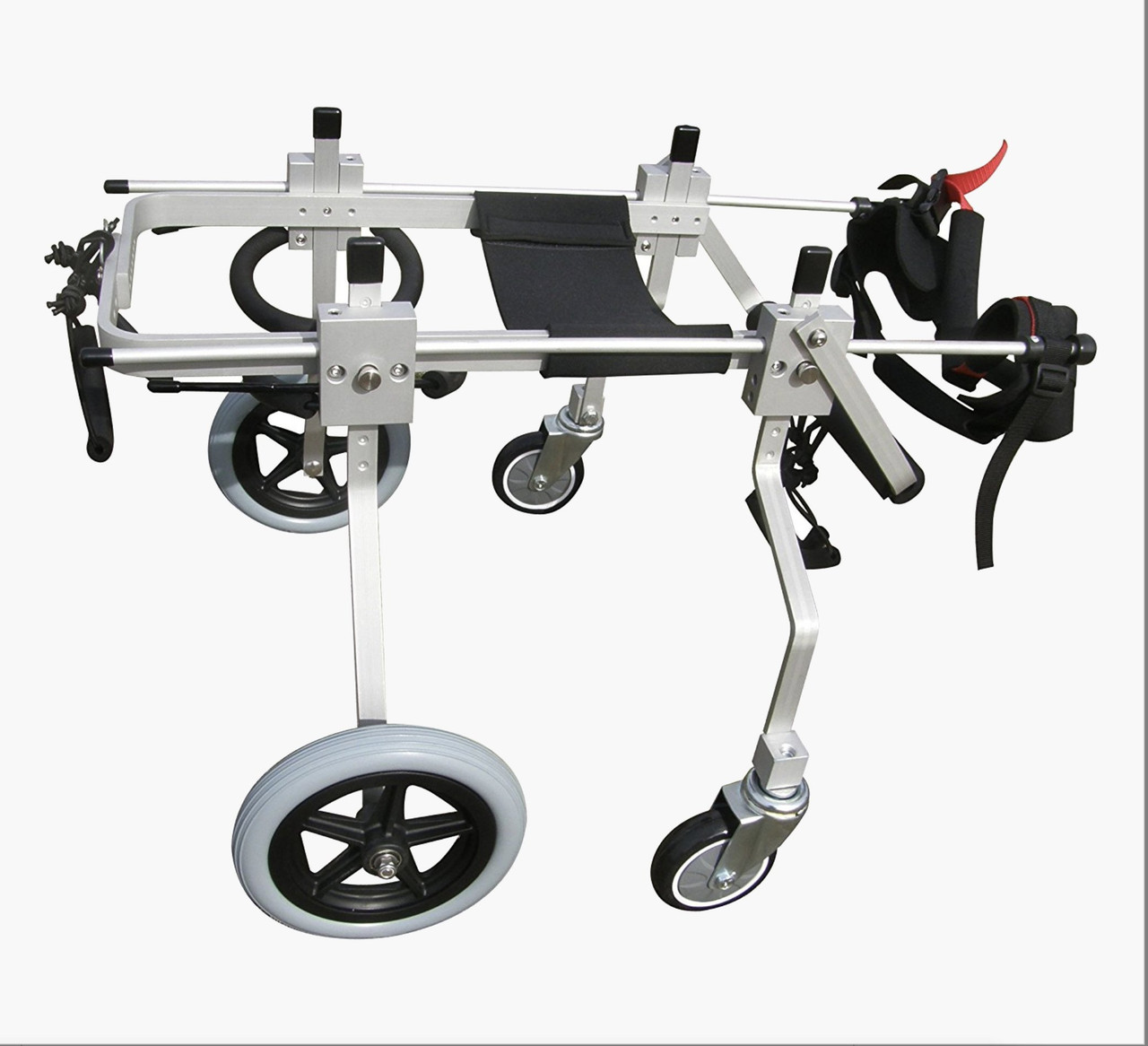 Desertcart
Best For
Small dogs that need support for both their front and rear limbs.
➡️➡️➡️ Explore User Feedback and Current Pricing on Amazon
Best Friend Mobility Small Dog Wheelchair
Short Description
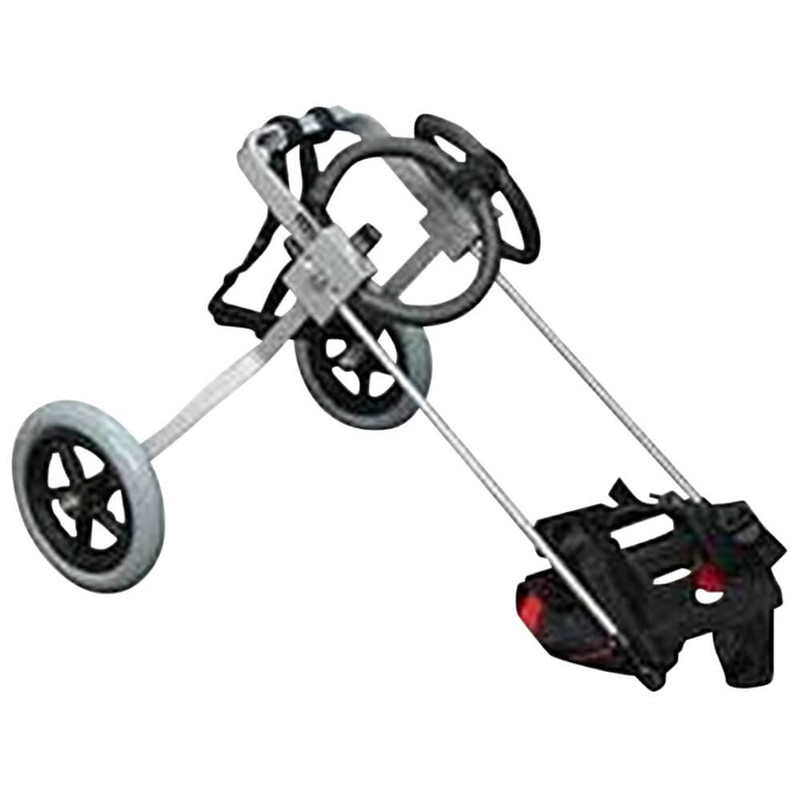
This lightweight rear-support option is intended for smaller pets that still have functional front legs. Its simpler construction makes it appealing when full four-wheel support is unnecessary.
Key Specifications
- Rear-support design for small dogs
- Lightweight adjustable aluminum frame
- Stainless-steel hardware
- Adjustable height, length, and width
- Neoprene harnessing
- Polyurethane wheels with sealed bearings
- Supports assisted walking or full rear-leg suspension Best Friend Mobility
Pros
- Lightweight frame
- Three-dimensional adjustment
- Suitable for assisted walking
- All-terrain wheels
- Allows rear legs to be supported when necessary
Cons
- Accurate sizing remains crucial
- Less appropriate if front-leg strength is poor
- Assembly experiences vary among owners
My Experience
For a small dog, keeping unnecessary weight down is important, and that is where this design makes sense to me. It supplies rear support without the extra front frame and wheels of a quad system.
I also like the flexibility to let a dog use some rear-leg movement when appropriate or support the rear legs completely. That makes the cart useful across different levels of hind-limb weakness. Best Friend Mobility
What Other Buyers Say
Positive feedback mentions dogs adapting quickly, moving around more independently, and straightforward day-to-day use once correctly assembled. Negative comments center mainly on sizing, initial assembly, and harness positioning. Chewy
Best For
Small dogs with rear-leg weakness that still have solid front-leg function.
➡️➡️➡️ Explore User Feedback and Current Pricing on Amazon
How to Choose the Right Pet Product
Start with your dog's mobility pattern. A rear-support cart assumes the front legs can bear and propel the dog's weight. If both ends are weak, a quad wheelchair is usually the more relevant design.
Measure before buying. Weight alone is not enough. Depending on the system, rear-leg height, body length, width, or other measurements can determine whether the cart sits level and keeps the harness in the proper position.
Prioritize adjustment. Adjustable height, length, and width can be valuable for unusual body proportions and can make fine-tuning easier.
Look at harness comfort. Padding and correct weight distribution matter because straps remain in contact with the body while the dog walks.
Consider the wheels. Puncture-resistant foam or polyurethane wheels reduce maintenance. Larger wheels can also make grass and uneven surfaces easier to negotiate.
Think about cleaning and transport. Washable harness parts are useful for daily wheelchair users. A fold-flat frame is also helpful if you frequently drive to parks, rehabilitation appointments, or walking areas.
Most importantly, a wheelchair is a mobility aid rather than treatment for the underlying cause of weakness. Sudden mobility loss or uncertainty about whether a dog can safely use a cart should be evaluated by a veterinarian.
FAQs
1. Should I buy a two-wheel or four-wheel dog wheelchair?
A two-wheel rear-support cart is usually suited to dogs whose front legs remain strong. A four-wheel wheelchair adds front support and is more appropriate when weakness affects both ends of the body.
2. How do I know whether a dog wheelchair fits correctly?
The dog's body should remain comfortably supported and reasonably level without excessive pressure from straps or harnesses. The wheels should be positioned so the dog can move naturally rather than fighting the frame.
3. Can a dog go to the bathroom while using a wheelchair?
Many rear-support dog wheelchair systems are intentionally designed to permit elimination while the dog remains in the cart. Harness positioning still needs to be correct for the individual dog.
4. Are dog wheelchairs suitable for grass and uneven ground?
Many of the models in this guide use polyurethane or dense-foam all-terrain wheels. They can handle grass and moderate uneven surfaces better than tiny indoor casters, although steep, slippery, or highly irregular terrain requires more caution.
5. How long does it take a dog to get used to a wheelchair?
There is no single adjustment period. Some buyers report dogs moving confidently almost immediately, while others require gradual introductions. Short, positive sessions are more sensible than forcing a nervous or fatigued dog to stay in the cart.
Conclusion
For the Best Overall choice, I recommend the Walkin' Wheels Dog Wheelchair Large Dogs 70-180 lbs because its highly adjustable aluminum frame, puncture-resistant wheels, and established rear-support system make it especially versatile for large dogs.
My Best Value pick is the Best Friend Mobility Rear Support Wheelchair 2.0 Large. Its tool-free adjustments, padded harnessing, and durable rear-support construction provide a strong feature set without moving into the highest price tier.
For the Best Premium Choice, I would select the Best Friend Mobility PRO Dog Wheelchair Medium-XL because the ability to convert the rear cart into a full-support system gives owners more flexibility as a dog's needs change.
Ultimately, the best dog wheelchair for 2026 is the one that matches your dog's size, remaining leg strength, body proportions, and everyday environment. I would prioritize accurate measurements and correct support type before any other feature.