Top 6 Best Dog Ramp for SUV Side Door for 2026
Getting a dog safely through an SUV side door can be harder than loading through the rear hatch. Side-door openings are often narrower, the step-up can be high, and there may be less room to position a long ramp. That makes dimensions, traction, stability, folding size, and weight capacity especially important.
For 2026, I would prioritize a long folding ramp with a grippy walking surface and enough capacity for your dog without becoming excessively heavy to move around. After narrowing the options to models that are genuinely suitable for vehicle access, I found one ramp I can confidently recommend rather than padding this list with indoor pet stairs that are not designed for SUV loading.
Quick Summary
This guide is best for owners of medium and large dogs, senior dogs, short-legged breeds, and dogs that have difficulty jumping into an SUV.
For side-door use, I generally prefer a folding aluminum ramp. A longer ramp produces a more manageable incline, while a textured walking surface helps dogs maintain their footing.
My top overall recommendation is the Dog Ramp for Car 63in Folding Up to 250lbs. Its 63-inch length, folding aluminum design, approximately 17-inch width, and 250-pound load rating make it a strong match for vehicle use. The main limitation is that owners of particularly tall SUVs should measure the side-door sill height before buying because 63 inches can create a relatively steep incline on higher vehicles.
Top Product List
- Dog Ramp for Car 63in Folding Up to 250lbs — Best Overall for SUV Side Doors
Best Dog Ramp for SUV Side Door
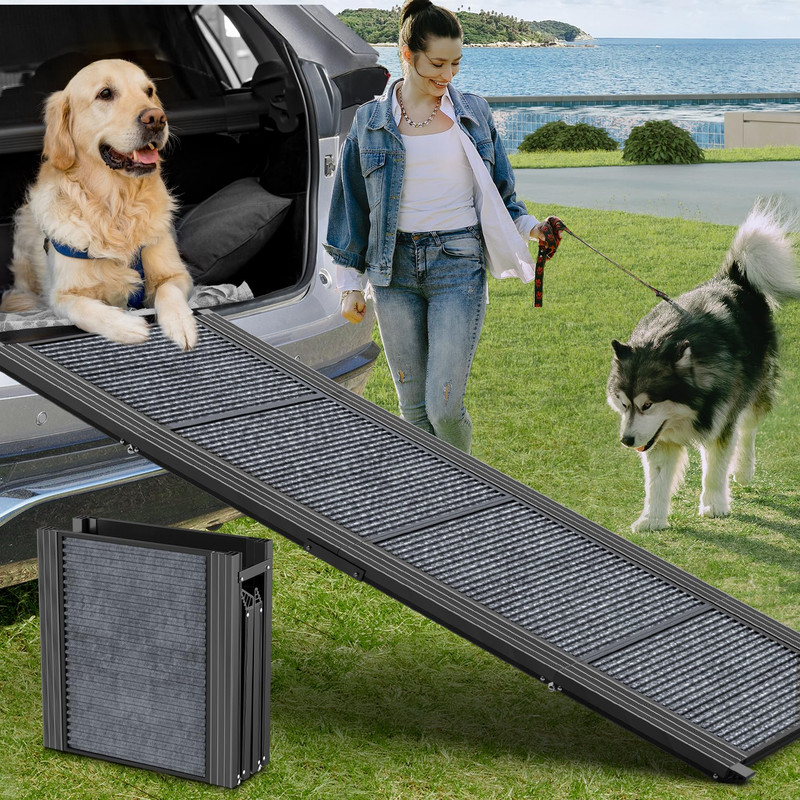
Dog Ramp for Car 63in Folding Up to 250lbs
Short Description
The Dog Ramp for Car 63in Folding Up to 250lbs is a portable aluminum vehicle ramp designed to help dogs enter and exit cars, SUVs, and trucks without having to make a full-height jump.
I think its combination of a 63-inch walking length and four-section folding design makes the most sense for owners who want something long enough for regular vehicle loading but compact enough to keep in an SUV.
Key Specifications
- Length: approximately 63 inches
- Width: approximately 17.3 inches
- Product thickness: approximately 1.3 inches
- Weight: approximately 13.5 pounds
- Load capacity: up to 250 pounds
- Frame material: aluminum
- Four-fold design
- Textured, non-slip walking surface
- Folded footprint: approximately 17.5 × 17 × 5.5 inches
- Designed for vehicle and outdoor access
Pros
- 63-inch length provides a gentler approach than very short vehicle ramps
- Aluminum construction keeps its weight relatively manageable
- 250-pound capacity accommodates most dog sizes
- Four-fold construction becomes compact for SUV storage
- Textured surface gives paws more traction than bare plastic or metal
- Useful for senior, large, short-legged, or mobility-limited dogs
- Can work at either an SUV cargo opening or a suitably sized side-door sill
Cons
- A 63-inch ramp may still be steep on very tall or lifted SUVs
- The approximately 17-inch width may feel narrow to dogs that are nervous about ramps
- Some buyers report noticeable flex under heavier dogs
- Fabric or carpet-style traction surfaces can collect dirt and moisture
- Dogs unfamiliar with ramps may need gradual training before using it confidently
My Experience
What stands out to me about this design is the balance between usable length and storage size. A dog ramp can have excellent traction and capacity, but it is much less practical if it occupies most of the cargo area every time I take it along. Folding into four sections makes this model considerably easier to store.
At roughly 13.5 pounds, it is also light enough that I would consider it practical for regular loading and unloading. That matters if the ramp is being used several times during a road trip rather than only occasionally.
For an SUV side door specifically, I would pay close attention to positioning. The approximately 17.3-inch width needs a solid section of the door sill to rest against. I would measure the available opening before purchasing rather than assuming every rear passenger door has enough usable width.
The 63-inch length should work well with many normal-height SUVs, but geometry matters. As the sill gets higher, the same ramp becomes steeper. Owners of lifted SUVs or exceptionally tall vehicles may benefit from a longer ramp.
I also like the textured walking surface for dogs that hesitate on slick materials. However, I would introduce the ramp while it is flat on the ground first. Once the dog is comfortable walking across it, I would gradually increase the incline before trying the full SUV height.
What Other Buyers Say
Recurring buyer feedback is generally positive about portability, setup, storage, and stability. Owners frequently mention that the folding design takes up surprisingly little space once collapsed and that the ramp makes loading larger dogs substantially easier.
The textured surface also receives positive comments for helping dogs maintain their footing.
The most common reservations are that some dogs need time to become comfortable with a ramp and that the structure can flex somewhat under heavier animals. A few owners also find traction less confidence-inspiring when the surface is wet.
Those comments reinforce why I would train a dog gradually and keep the walking surface clean and dry whenever possible.
Best For
I think this ramp is best for medium and large dogs using standard-height SUVs, particularly senior dogs, dogs recovering from mobility problems, and breeds that owners want to discourage from repeatedly jumping from vehicle height.
It is also a good option for owners who need a ramp that can remain in the SUV without consuming a large amount of cargo space.
➡️➡️➡️ Explore User Feedback and Current Pricing on Amazon
How to Choose the Right Pet Product
Choosing a dog ramp for an SUV side door requires more care than simply checking its maximum weight rating.
Start with your dog's size and mobility. A young, agile 25-pound dog has different needs from a 90-pound senior Labrador. Larger or less stable dogs usually benefit from more width, better traction, and less flex.
Measure the SUV door opening. For side-door use, check the sill height as well as the usable width where the upper edge of the ramp will rest. A ramp designed for a wide cargo opening may not sit securely in every passenger doorway.
Consider ramp length. Longer ramps normally create a gentler incline. A 63-inch ramp can work well for many SUVs, but taller vehicles may call for something longer.
Check weight capacity with a safety margin. I would not select a ramp whose rated capacity barely exceeds the dog's weight. Extra capacity can contribute to a more confidence-inspiring feel, especially with a large dog moving dynamically across the surface.
Prioritize traction. Carpet, textured fabric, rubberized materials, or other high-grip surfaces can help prevent paws from sliding. Traction becomes especially important on an incline.
Look at the frame and stability. Aluminum is popular because it combines strength with relatively low weight. Whatever the material, the ramp should rest firmly against the vehicle without shifting during use.
Think about folded size. A ramp that stays in the SUV should fit alongside groceries, luggage, crates, and other everyday cargo.
Consider carrying weight. Even a strong ramp becomes inconvenient if lifting it several times per day is difficult for you.
Plan for cleaning. Outdoor ramps will collect dirt, hair, mud, and moisture. Textured surfaces improve grip but may require more cleaning than smooth plastic.
Train before traveling. I would never make a dog's first ramp experience a steep climb into an SUV. Start with the ramp flat, reward calm walking, then progressively increase the incline.
FAQs
1. Is a 63-inch dog ramp long enough for an SUV side door?
It can be for many standard-height SUVs. The important measurement is the height of the door sill. A higher sill creates a steeper angle, so lifted or unusually tall SUVs may be easier for a dog to access with a longer ramp.
2. How wide should a dog ramp be for a large dog?
A wider ramp generally gives large or nervous dogs more confidence. The model reviewed here is approximately 17.3 inches wide, which works for many dogs, but very broad dogs or dogs with balance problems may be more comfortable on a wider platform.
3. Are ramps better than steps for senior dogs getting into an SUV?
A ramp can be easier for many senior dogs because it replaces several large step-up movements with a continuous incline. Individual mobility problems differ, though, so dogs with significant orthopedic or neurological limitations should follow their veterinarian's recommendations.
4. How do I teach my dog to use an SUV ramp?
I would place the ramp flat on stable ground first and reward the dog for calmly walking across it. Once that becomes routine, raise one end slightly and gradually increase the incline. Move to the SUV only after the dog is comfortable with the ramp itself.
5. How do I keep a dog ramp from slipping off an SUV side door?
The upper edge needs to sit completely and securely on a strong, appropriate part of the vehicle opening. Keep contact surfaces dry, follow the ramp manufacturer's setup instructions, and never use the ramp if its width or attachment position is incompatible with the door opening.
Conclusion
For the best dog ramp for an SUV side door in 2026, dimensions and vehicle compatibility matter more to me than having a long list of superficially similar products. A ramp needs enough length to limit the incline, reliable traction, adequate load capacity, and a folded size that makes everyday travel realistic.
Best Overall: Dog Ramp for Car 63in Folding Up to 250lbs
Best Value: Dog Ramp for Car 63in Folding Up to 250lbs
Best Premium Choice: Dog Ramp for Car 63in Folding Up to 250lbs
The Dog Ramp for Car 63in Folding Up to 250lbs is my preferred option because its 63-inch length, aluminum construction, four-fold portability, textured surface, and 250-pound capacity cover the most important requirements for regular SUV use. For a side door, I would measure the sill height and available resting width before ordering to make sure the ramp can be positioned securely.