Dog learning toys can turn ordinary treat time into a useful mental workout. I especially like interactive toys that encourage dogs to sniff, slide, rotate, chase, or problem-solve for a reward rather than simply chewing passively.
For 2026, I focused on toys that support mental stimulation, food-motivated learning, slower eating, or independent interactive play. I also considered difficulty, cleaning, suitability for different dog sizes, and whether the design is better for beginners or dogs that already understand puzzle toys.
Quick Summary
This guide is for dog owners looking for toys that can reduce boredom while encouraging problem-solving and more purposeful play.
For most dogs, treat-based puzzles work especially well because the reward gives them a clear reason to keep experimenting. My top overall recommendation is the PETSTA Dog Puzzle Treat-Dispensing Enrichment Toy because its treat-hiding format provides several ways for dogs to work for food and is well suited to repeated enrichment sessions.
Top Product List
- PETSTA Dog Puzzle Treat-Dispensing Enrichment Toy — Best Overall
- DR CATCH Dog Puzzle Food Toy for IQ Training Blue — Best Value
- FOXMM Interactive Dog Treat Puzzle Toy — Best for Intermediate Puzzle Play
- WOOF Pupsicle Interactive Dog Ball Toy Large Green — Best for Medium and Large Dogs
- Pets Know Best Wobble Wag Giggle Ball Interactive Dog Toy — Best for Chase-Based Learning
- 3-Level Interactive Puzzle Slow Feeder Dog Bowl — Best for Slow Feeding
Top 6 Best Dog Learning Toys for 2026
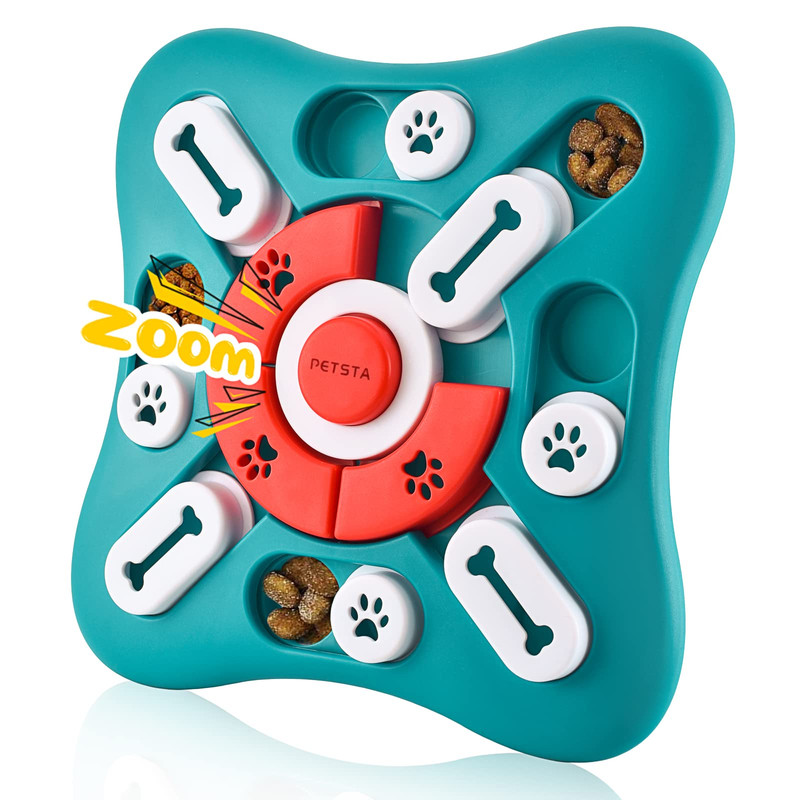
PETSTA Dog Puzzle Treat-Dispensing Enrichment Toy
Short Description
The PETSTA is a treat-dispensing puzzle designed to make dogs work through interactive movements to uncover food. I think it is particularly appealing for food-motivated dogs that need more mental stimulation indoors.
Key Specifications
- Puzzle-style treat dispenser
- Designed for dogs, puppies, and cats
- Multiple treat compartments
- Spin, slide, and hide-and-seek style interaction
- Non-slip base
- Polypropylene construction
- Intended primarily for indoor enrichment
Pros
- Multiple actions provide varied problem-solving
- Works well with food-motivated dogs
- Can make treat time more engaging
- Non-slip design helps control movement during use
Cons
- Not intended to replace a heavy-duty chew toy
- Determined dogs may eventually learn the solution
- Supervision is sensible for strong chewers
My Experience
What I like most about this format is that the dog has to experiment rather than simply retrieve an exposed treat. I would introduce it with several easy-to-find rewards before filling more compartments. That can help a beginner understand the basic cause-and-effect relationship without becoming frustrated.
What Other Buyers Say
Recurring feedback is positive about the mental engagement and treat-hiding design, while durability is a more important consideration for dogs that aggressively chew plastic puzzle components. Territory Dog World
Best For
Best for food-motivated dogs that enjoy searching, sliding, and manipulating puzzle components.
➡️➡️➡️ Explore User Feedback and Current Pricing on Amazon
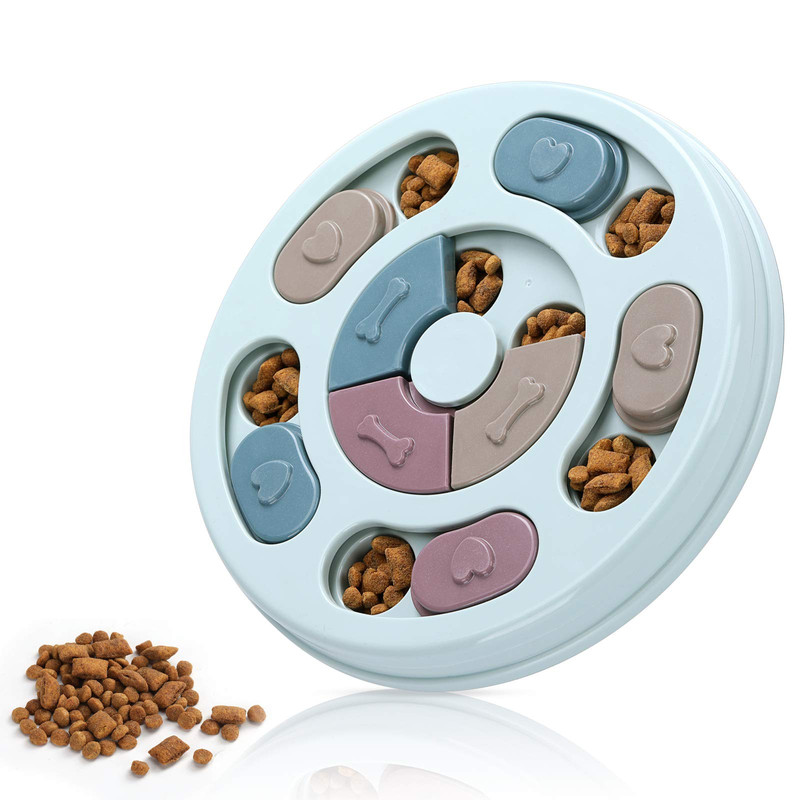
DR CATCH Dog Puzzle Food Toy for IQ Training Blue
Short Description
The DR CATCH puzzle uses sliding sections that encourage a dog to uncover hidden food with its nose or paws. I see it as one of the most approachable choices for dogs new to learning toys.
Key Specifications
- Sliding puzzle design
- Approximately 9.4-inch square format
- Treat or kibble compartments
- Lightweight construction
- Designed for mental enrichment and slow feeding
- Suitable for supervised indoor play
Pros
- Beginner-friendly puzzle format
- Compact and easy to store
- Can slow down treat or kibble consumption
- Simple mechanics make it easy to introduce
Cons
- Advanced dogs may solve it quickly
- Lightweight design can move during enthusiastic play
- Not designed for aggressive chewing
My Experience
I would choose this when introducing a dog to puzzle feeding for the first time. The sliding mechanism is relatively easy to understand, so the learning curve should be less intimidating than a complicated multi-stage puzzle.
What Other Buyers Say
Feedback frequently praises its simple enrichment value and affordability. A recurring limitation is that clever dogs can master the puzzle quickly, so it may eventually become more of a slow feeder than a difficult mental challenge. Territory Dog World
Best For
Best for puppies, beginners, and owners wanting an inexpensive introduction to dog puzzle toys.
➡️➡️➡️ Explore User Feedback and Current Pricing on Amazon
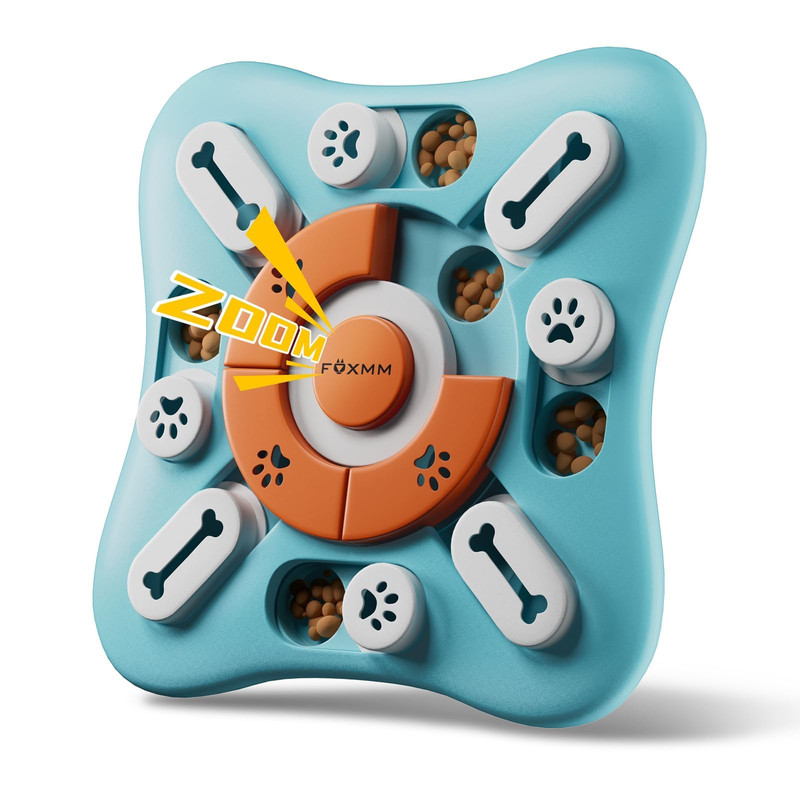
FOXMM Interactive Dog Treat Puzzle Toy
Short Description
The FOXMM combines treat compartments with interactive puzzle movement, giving dogs a slightly more involved challenge than a simple sliding feeder.
Key Specifications
- Level 2 puzzle style
- Approximately 10 x 10 inches
- Polypropylene construction
- Treat-hiding compartments
- Designed primarily for indoor use
- Lightweight and portable
- Intended for interactive training and mental stimulation
Pros
- Good step up from simple beginner puzzles
- Plenty of room for hiding small treats
- Compact enough for storage or travel
- Encourages nose-and-paw interaction
Cons
- May be small for some large dogs
- Not a chew-resistant toy
- Requires loading treats before each session
My Experience
I like this as a progression toy. Once a dog understands basic food puzzles, a Level 2 design asks for a little more persistence. I would still supervise closely, especially while the dog is learning which parts should move rather than be chewed.
What Other Buyers Say
Buyers commonly praise its ability to keep dogs focused and mentally occupied. Positive feedback also mentions easy treat loading, while some owners consider the overall size smaller than expected for medium or large dogs. Woot
Best For
Best for dogs that have already mastered basic beginner treat puzzles.
➡️➡️➡️ Explore User Feedback and Current Pricing on Amazon
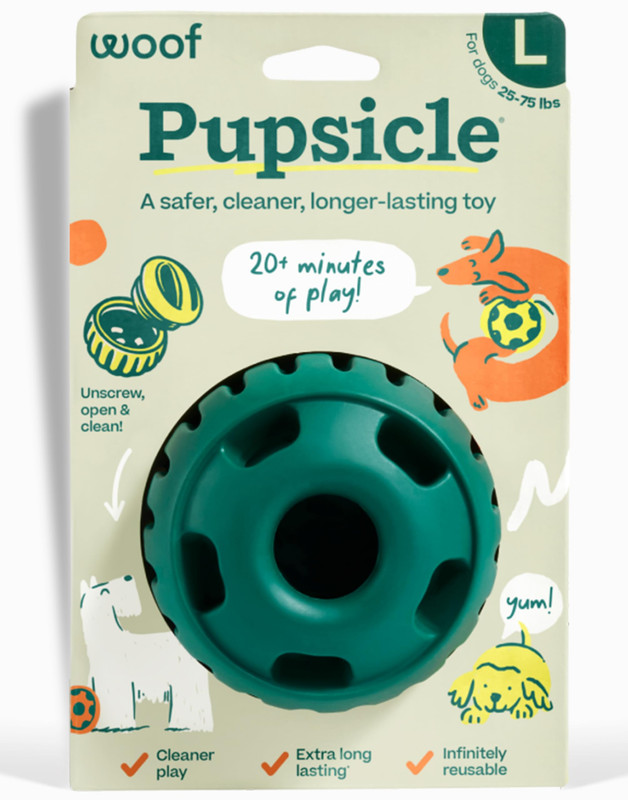
WOOF Pupsicle Interactive Dog Ball Toy Large Green
Short Description
The WOOF Pupsicle takes a different approach to learning and enrichment by giving dogs a food-centered activity inside a ball-shaped toy rather than a flat puzzle board.
Key Specifications
- Large green interactive enrichment toy
- Designed for medium and large dogs
- Listed for dogs approximately 25–75 pounds
- Natural rubber construction
- Refillable food-oriented design
- Designed for relatively low-mess enrichment
- Washable construction
Pros
- Better suited to larger dogs than many flat puzzles
- Encourages sustained food-focused engagement
- Reusable design
- Easy-clean material
Cons
- Less focused on multi-step puzzle solving
- Requires food or compatible fillings for maximum engagement
- Size needs to match the dog appropriately
My Experience
I would pick this for a dog that enjoys licking and working gradually for food but loses interest in complicated sliding puzzles. It provides a different kind of learning: persistence and sustained engagement rather than solving several moving mechanisms.
What Other Buyers Say
Buyer ratings indicate generally positive satisfaction with its enrichment concept, though experiences vary depending on the dog's chewing style and interest in food-filled toys. ASINSIGHT
Best For
Best for medium and large dogs that enjoy longer food-based enrichment activities.
➡️➡️➡️ Explore User Feedback and Current Pricing on Amazon
Pets Know Best Wobble Wag Giggle Ball Interactive Dog Toy
Short Description
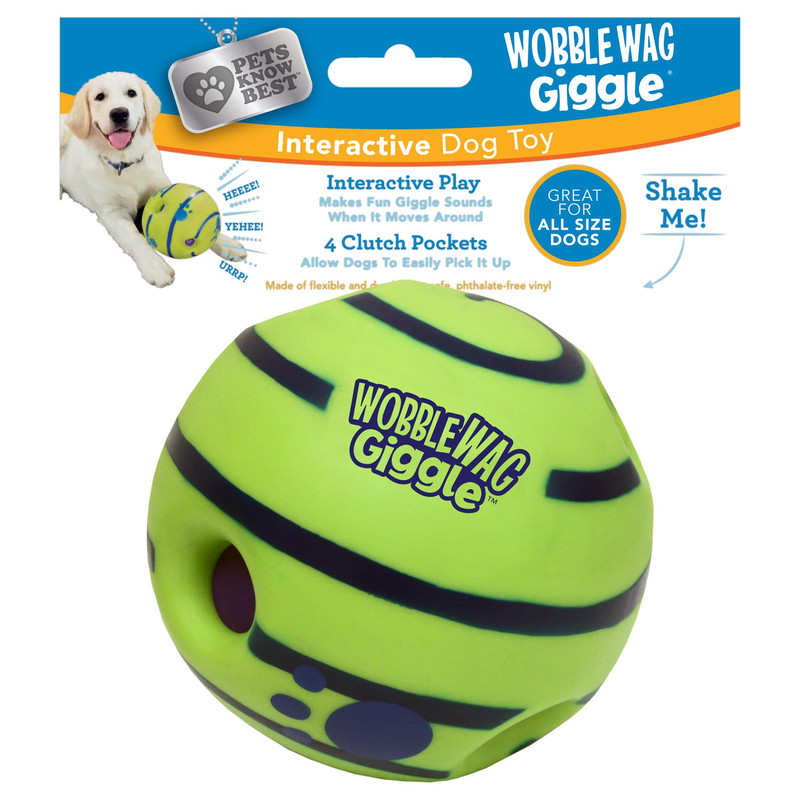
Instead of hiding food, the Wobble Wag Giggle Ball encourages dogs to investigate and chase movement and sound. Internal tubes create giggling noises as the ball rolls or shakes.
Key Specifications
- Interactive rolling ball
- Produces sound when rolled or shaken
- No treat loading required
- Designed for movement-based play
- Intended to encourage chasing and exploration
Pros
- Does not rely on treats
- Sound can encourage curiosity
- Promotes active play
- Simple to use with no puzzle setup
Cons
- Noise may not appeal to every dog
- Less structured problem-solving than a treat puzzle
- Rolling play requires adequate floor space
My Experience
I see this as a good complement to food puzzles rather than a direct replacement. A dog has to discover that pushing and rolling the ball produces an interesting response, creating an easy cause-and-effect game that also encourages physical activity.
What Other Buyers Say
The toy has accumulated a very large volume of buyer feedback. Many owners enjoy the unusual giggling sound and the way it encourages chasing, although response depends heavily on whether an individual dog finds noisy toys exciting or intimidating. ASINSIGHT
Best For
Best for playful dogs motivated more by movement and sound than by treats.
➡️➡️➡️ Explore User Feedback and Current Pricing on Amazon
3-Level Interactive Puzzle Slow Feeder Dog Bowl
Short Description
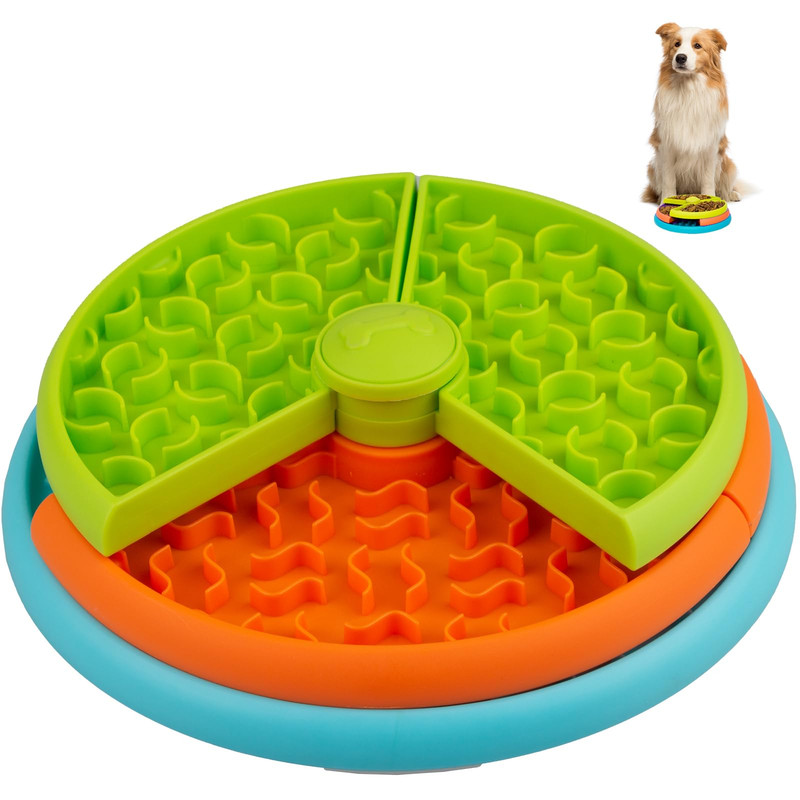
This three-level feeder combines a rotating puzzle mechanism with slow feeding, requiring dogs to manipulate different levels to locate food.
Key Specifications
- Three-level rotating puzzle design
- Approximately 10.35 inches in diameter
- Polypropylene construction
- Food-safe puzzle-feeder format
- Rounded edges
- Designed for small, medium, and larger pets
- Non-slip interactive feeding concept
Pros
- Combines learning with mealtime
- More complex than a basic slow-feeder bowl
- Multiple rotating levels encourage experimentation
- Useful for dogs motivated strongly by meals
Cons
- More parts and layers require more cleaning
- May initially frustrate inexperienced dogs
- Not intended as an unsupervised chew toy
My Experience
This is the option I would consider when I want mental enrichment to become part of an everyday routine. Because the reward is the dog's meal, there is a built-in incentive to investigate how the different layers move.
What Other Buyers Say
Feedback around this style of feeder tends to emphasize the combination of slower eating and mental engagement. The multi-layer mechanism is more involved than a standard bowl, so dogs unfamiliar with puzzles may need an easier introduction at first. Ubuy Martinique
Best For
Best for food-driven dogs that eat quickly and need more challenging mealtime enrichment.
➡️➡️➡️ Explore User Feedback and Current Pricing on Amazon
How to Choose the Right Pet Product
Start with your dog's experience level. A first-time puzzle user will usually do better with obvious sliding compartments than a complicated multi-stage challenge. Making the first session too difficult can cause the dog to walk away or start chewing the toy instead of solving it.
Size matters as well. Small puzzle pieces and lightweight boards can be awkward for large dogs, while oversized mechanisms may be difficult for puppies or toy breeds to manipulate.
I also pay attention to motivation. Food-driven dogs often respond especially well to treat puzzles and slow feeders. Dogs that are less interested in food may prefer movement, squeaks, sounds, or chase-based interactive toys.
Durability should match chewing behavior. Puzzle toys are primarily designed for problem-solving, not necessarily sustained chewing. Supervision is particularly important with dogs that tend to destroy toys.
Cleaning is another major consideration because treats, kibble, wet fillings, and saliva can collect in compartments. Simple surfaces or washable components are much easier to maintain when the toy is used frequently.
Finally, increase difficulty gradually. I prefer giving a dog easy wins first and then making the puzzle harder once the basic mechanism is understood.
FAQs
What type of learning toy is best for a dog that has never used puzzles?
A simple sliding treat puzzle such as the DR CATCH is generally easier to introduce because the dog only needs to learn one basic mechanism.
Are dog learning toys useful for fast eaters?
Yes. Treat puzzles and puzzle feeders can make dogs work through several steps instead of consuming everything immediately. For regular meals, choose a product specifically designed to function as a feeder.
How difficult should a dog puzzle be?
It should require some effort without causing persistent frustration. If your dog gives up almost immediately, simplify the activity by leaving some compartments partially open or placing treats where they are easier to find.
Can aggressive chewers use puzzle toys?
They can use some puzzle toys under supervision, but learning puzzles should not automatically be treated as chew toys. Choose appropriately durable products and remove them once the enrichment session is finished.
Should I use the same learning toy every day?
You can, but rotating different puzzle styles helps prevent the activity from becoming completely predictable. I like alternating between sliding puzzles, slow feeders, food-filled toys, and movement-based interactive toys.
Conclusion
For the Best Overall dog learning toy for 2026, my pick is the PETSTA Dog Puzzle Treat-Dispensing Enrichment Toy because its multiple treat-hiding actions provide a useful balance of challenge and everyday enrichment.
For the Best Value, I prefer the DR CATCH Dog Puzzle Food Toy for IQ Training Blue. Its straightforward sliding puzzle is especially suitable for dogs just beginning mental enrichment.
For the Best Premium Choice, I would choose the WOOF Pupsicle Interactive Dog Ball Toy Large Green, particularly for medium and large dogs that enjoy longer food-focused sessions.
Ultimately, the best dog learning toy is one that matches your dog's size, motivation, chewing habits, and current problem-solving ability. Starting with an achievable challenge and gradually increasing difficulty usually makes enrichment more rewarding for both the dog and the owner.